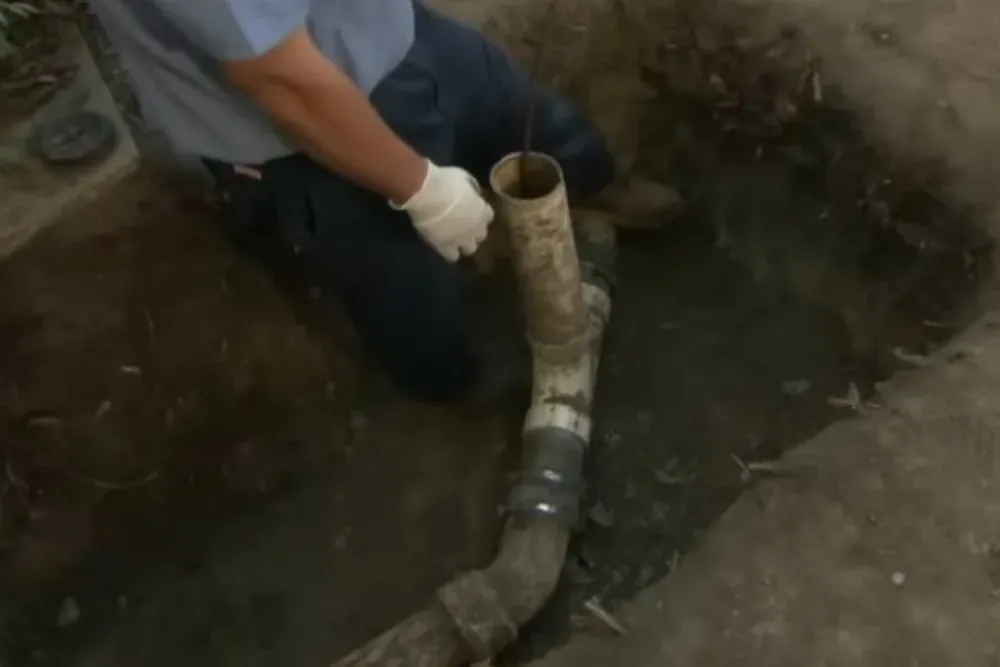
When a sewage backup keeps returning after cleaning, the pipe itself is usually damaged, and the water in your basement will not stop until that damage is repaired.
Emergency sewer line repair in Morton Grove is the job of a licensed plumber who fixes a broken, cracked or collapsed section of the pipe carrying waste from your house out to the village sewer. Our 24/7 dispatch can send a plumber to stop the backup and assess the pipe, and the notes below show what to do in the meantime.
Repair is a bigger job than cleaning. Understanding the choices before the crew arrives helps you compare options calmly, even when the basement is wet.
When the pipe may be broken
- Backups that return within days or weeks of cleaning
- A cable that stops at the same spot every time
- A sewer smell in the yard or along the foundation
- A wet or sunken patch of lawn over the sewer path
- Gurgling drains and slow fixtures throughout the house
- Roots found on an earlier camera look
When a broken sewer pipe is an emergency
Call at once if sewage is coming up inside the house or if a sinkhole or soft spot has appeared over the line. A fully collapsed pipe cannot carry waste at all, and every flush adds to the mess. A hairline crack with roots in it is less urgent and can often be booked for later the same day, provided nobody in the house runs any water until then.
While you wait for the plumber
- Hold off on every tap. No flushing, showering or laundry until the pipe is open.
- Keep people and pets away from sewage on the floor, and do not touch it.
- If the floor is wet, keep away from outlets and extension cords. Trip the breaker only when you can reach the panel on dry ground.
- Keep children and pets away from any soft or sunken spot in the yard.
- Take photos of the damage before any cleanup, since your insurer will ask for them.
Finding the break before choosing a fix
A repair plan starts with a camera. The plumber threads a sealed camera head down the cleanout and records the pipe, noting the distance and depth of every crack, offset joint, sag and root entry. That record decides whether a short spot repair will do or the line needs more.
Skipping the camera means guessing. Digging in the wrong place costs money and gets the yard torn up for nothing. A sewer inspection before the repair gives you the same picture the plumber has, which makes quotes much easier to compare.
Spot repair, lining or full replacement
Three repair paths exist, and each has a trade-off. The best choice depends on the length of damage, the pipe material and what lies above it.
| Option | Best for | Trade-off |
|---|---|---|
| Spot repair | One short crack or a broken joint, such as a localized crack with root intrusion | Fixes only the dug or accessed section |
| Pipe lining | Long cracked runs with few sags or offsets | Cannot fix a collapsed or badly offset pipe |
| Full replacement | Collapsed, bellied or heavily rooted pipe | Most disruptive and costly, longest lasting |
| Trenchless spot repair | Short damage under a driveway, patio or tree | Limited by pipe condition and access |
A trenchless spot repair uses a resin-soaked sleeve placed over the damaged section, then cured so it hardens inside the pipe. Full lining coats the whole run. Both avoid a long trench, but both need the pipe to be mostly intact and clear. If the camera shows a collapse, replacement is the honest answer.
Cast iron pipe repair
Many Morton Grove houses were built during the postwar boom, when cast iron was common for drain and sewer pipe. Cast iron rusts from the inside, forms rough scale and can crack or flake with age. A pipe that is rough inside catches paper and roots, so it clogs more often.
Cast iron has three choices. A short bad section can be cut out and replaced with plastic pipe using a coupling. A longer run can be lined, if the wall is still sound. A pipe that is flaking apart, or that has lost its shape, should be replaced. Lining over weak iron only delays the failure, so expect the plumber to look at the camera footage with you before recommending a path.
Overhead sewers and the village loan
If your basement backs up from the sewer during storms, the cause may be the way the house connects to the village main, not a broken pipe. A separate village assistance program, the Overhead Sewer and Flood Control one, exists for houses built before 1965 within village limits. Its purpose is to pay part of the cost of converting a gravity connection so sewage cannot flow back in.
The program funds two kinds of conversion. The first is an overhead sewer, which reworks the soil stack so drainage below the basement slab no longer relies on gravity.
The second is a one-way valve fitted outside the house, with a bypass pump in an underground vault on the lateral. The village loan covers 50 percent of the actual cost, up to a maximum of $5,000, and is repaid on sale or at the 10-year anniversary. Only owner-occupied owners qualify, and the loan is available once per address.
Applicants collect bids from three contractors with current Illinois plumbing licenses. Picking a pricier bidder does not raise the loan, which stays at half of the lowest bid. Money goes out in order of application and the budget can shift between years, so ask Public Works what is open now.
Morton Grove note: permits, licenses and loan rules
Before the dig, the village wants a permit for the sewer repair itself. So does adding a cleanout, a flood control valve or an overhead sewer. A contractor needs a Village Contractor's License to work here, backed by a $10,000 bond and liability coverage.
Water from the roof and foundation needs its own route, so the village expects storm drainage such as a sump pit for those lines, never a tie into the sanitary sewer.
For an inspection of what you have now, Inspectional Services staff at the village hall can be reached on (847) 470-5214.
Source type: village overhead sewer assistance page plus the building permits page
Where the sewage goes next
Your house lateral connects to a village sewer, and village sewage travels to interceptors and treatment plants run by the regional reclamation district, MWRD. Morton Grove has no treatment plant of its own. That matters for repair because the village main is not your responsibility, while the private lateral is. Ask Public Works where your private line ends before the crew digs.
If a flood-prone spot or a sump pit is part of the problem, sump pump repair and basement waterproofing often belong in the same plan.
What sewer repair costs
Quotes vary a lot because the jobs do. Expect a clear price before work starts and compare like with like.
What changes the price
- Repair method: a spot repair costs far less than a full replacement.
- Depth and length: deep or long damage means more digging or more lining material.
- Surface above the pipe: lawn is cheaper to restore than concrete, a driveway or a tree root zone.
- Permit and inspection: village permits and inspections add steps and time.
- Hour of the call: emergency dispatch outside regular hours adds to the labor line.
Homeowner insurance usually does not cover a worn-out pipe, since age and root damage count as maintenance. A few policies pay for the resulting water damage if a sewer backup endorsement was bought. Ask your insurer which parts apply before you sign anything.
Want your real number? Call (847) 281-8626.
Backup after a cleaning?
Tell us what the cable hit and where.
For the cleaning itself, see sewer line cleaning. Repair crews also work in Park Ridge, with the same after-hours dispatch.
Sewer repair questions
Frequently asked questions
Yes. Calls are taken around the clock, and a licensed plumber can be sent overnight or on a weekend. The first goal is to stop sewage reaching the house and look at the pipe with a camera. A daytime slot the same day may exist, but nobody can promise a set arrival time.
It can, if the wall is still sound. Pipe that is flaking or deformed should be replaced.
Yes. The village issues permits for replacing or digging into a sewer or water line, and for adding cleanouts, flood control valves or overhead sewers. The contractor must also carry a Village Contractor's License.
It pays 50 percent of the actual cost, up to $5,000, for owner-occupied homes built before 1965. Repayment comes on sale or at 10 years. Funding can change, so check with Public Works.
Only if the pipe was the cause. Storm backups often need an overhead sewer or a backflow valve as well.
Ask for the plumber's license number, then enter it in the state IDPH lookup. Make sure the name on the record matches the person quoting you.