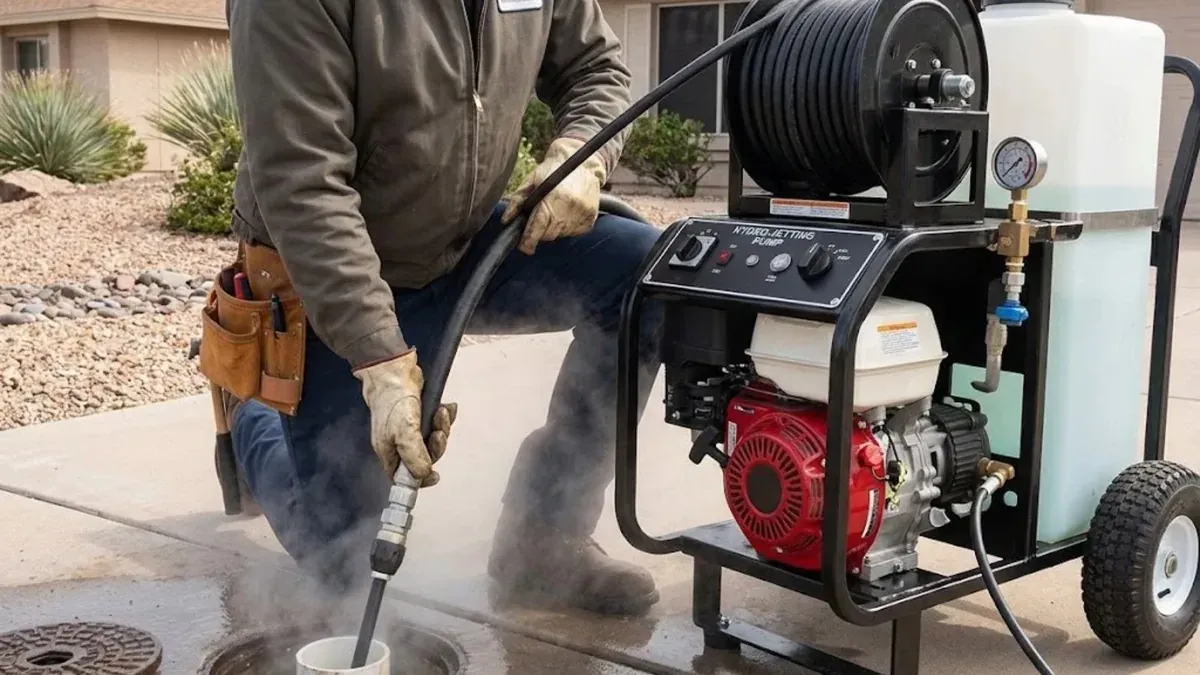
Sewage rising in a floor drain, tub or basement toilet means your main sewer line is blocked, and it needs attention right now. Emergency sewer line cleaning in Morton Grove is the work of clearing that main line, the pipe that carries all household waste out to the street, using a motorized cable or high-pressure water. Around-the-clock dispatch sends licensed plumbers, and the first priority is protecting your family from contact with the water.
Sewage is a health hazard. A short list of first steps below keeps the damage small while the plumber is on the way.
What to do first when sewage backs up
- Stop all water use at once. Do not flush, run the washer or shower.
- Keep people and pets out of the wet area. Avoid touching the water with bare skin.
- Do not use a wet vacuum on sewage. Wear rubber boots and gloves if you must enter.
- With a wet floor, keep away from outlets, cords and the panel. Leave the main breaker alone unless the panel sits on a dry floor.
- Call your insurer once the plumber has cleared the line, and take photos before you clean up.
Reading a sewer backup
A sewer backup differs from a sink clog because the trouble lies downstream of every fixture. The lowest drain in the house, often a basement floor drain or shower, is the first to show it. If the toilet upstairs bubbles when the basement drain gurgles, the main is the source.
Signs the main line is blocked
- Water or sewage comes up in the lowest floor drain
- The toilet, tub and floor drain gurgle together
- Flushing makes a nearby drain bubble or rise
- Several fixtures drain slowly at once
- A sewer smell appears with no visible leak
- The clog returned within days of a cable visit
How a plumber clears the main line
The plumber begins at the cleanout, a capped pipe that gives direct access to the sewer line. A motorized cable with a cutting head runs through the blockage until water flows again. For grease, scale and heavy roots, the plumber may follow up with hydro jetting to wash the pipe wall.
Once the line is open, a camera pass through sewer inspection reveals what caused the block. A single wad of paper is a one-time event. A sagging section, a cracked joint or a root mass means the problem will come back and the line may need sewer line repair.
Combined sewers in the northeast part of the village
Two kinds of village sewer exist here. Combined sewers move household sewage and rain runoff in one pipe, while separate sanitary sewers take sewage only. The combined area covers the northeast part of the village, between Chick Evans Golf Course and Main Street. If your home sits inside those lines, a heavy storm can fill the village sewer and slow your own line.
Two overflow outfalls to the North Branch, at Church Street and Dempster Street, relieve that system in big storms. A backup that coincides with heavy rain is therefore not always your pipe's fault, but a clean, clear lateral still gives you the best chance of staying dry.
Morton Grove note: who tracks backups
Under the village's combined sewer overflow plan, basement backups are logged, and a main line backup must be reported to the Illinois EPA inside a day. Those records concern the village main. The pipe from your house to the street is generally your responsibility, so ask Public Works at (847) 470-5235 where the private line ends.
Source type: village sewer overflow plan covering backup reporting
Main sewer cleaning and sewer drain cleaning
These are two names for the same job at different points in the pipe. Main sewer cleaning covers the long run from the house wall to the street connection. Sewer drain cleaning usually refers to the shorter branch lines inside the house that feed it. A cable can handle either, though the main run often needs a larger cutting head and more length.
For a smaller fixture-level clog, drain cleaning is the matching service. If the plumber finds that a cleanout is missing, installing one makes every future visit faster and cheaper, and the village does require a permit for that work.
Storm drain cleaning for yard drains
Yard drains, driveway drains and window-well drains carry rainwater, not sewage, and they clog with leaves, silt and mulch. A blocked yard drain sends water toward the foundation, which can lead to a wet basement during a storm. A plumber can cable or jet these lines the same way as a sewer lateral.
Village rules keep roof, foundation and paved-area drainage out of the sanitary sewer altogether. If your yard drain is tied into it, that is a problem the camera will reveal, and it should be fixed by a licensed plumber with the village's input.
Cost factors for sewer cleaning
The price rests on how long the line is and what is inside it. A plain paper blockage takes a single pass of the cable. Roots, grease and a damaged pipe take more time and more tools.
What changes the price
- Line length: the distance from the cleanout to the blockage sets cable length and time.
- Access: an existing cleanout is simple. A line with none may need a toilet pulled or a roof vent used.
- What is blocking it: paper clears fast. Roots and grease need cutting heads or jetting.
- Camera follow-up: the look afterward adds time but finds the cause of the backup.
- Hour of the call: a midnight or Sunday visit carries a higher labor charge than a weekday daytime one.
Most policies leave out sewer backup unless an endorsement for it was bought, and clearing the line is usually treated as maintenance. If water damaged finished flooring or stored belongings, ask your insurer what applies. Keep the plumber's invoice and photos.
Want your real number? Call (847) 281-8626.
Sewage in the basement?
Call now and tell the dispatcher which drains are involved.
Dispatch also covers neighboring Glenview for after-hours backups, and the same instructions apply there.
Sewer cleaning questions
Frequently asked questions
Yes. Someone answers the phone at every hour, and a licensed plumber can be sent to open a blocked main in the middle of the night. The first pass is at the cleanout with a cable. Daytime slots on the same day depend on the schedule, and no exact arrival time is promised.
The village maintains its sewer mains. The pipe from your house to the street connection is usually yours. Public Works can tell you exactly where your private line stops.
Yes, especially in the combined sewer area, where rain and sewage share the village main. A clean lateral helps, and flood control devices help more.
Wait until the line is clear. Then wear rubber boots and gloves, and keep children away. Porous items touched by sewage are often best discarded.
Only if the cause was a one-time blockage. Roots, sags and cracked joints need a camera look and often repair.
The plumber can tell by where the blockage sits. If it is beyond your property, Public Works handles the main.