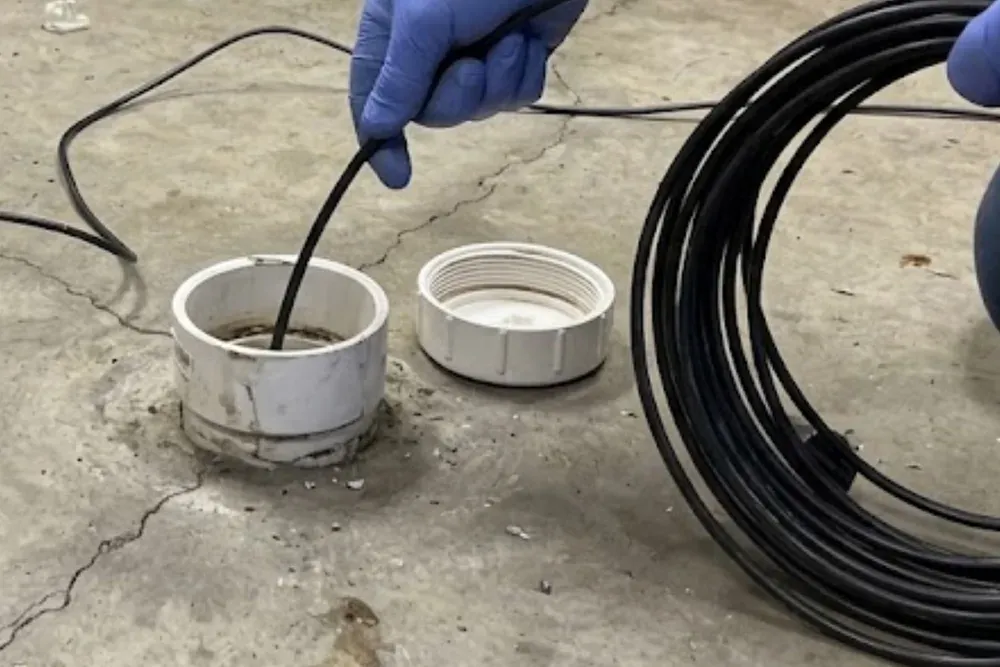
A sewer inspection is a video look inside your sewer line, and it answers a question no amount of guessing can. In Morton Grove, a licensed plumber slides a compact sealed camera into the line at the cleanout and records every crack, sag, offset joint and root along the pipe from the house to the street. The footage turns an unknown pipe into a known one.
Most people book an inspection for a planned reason. They are about to buy a house, drains keep slowing, or a repair or lining is being quoted.
Reasons to scope the line
- Slow drains that return after cleaning
- Gurgling when a toilet flushes or a washer drains
- Roots spotted in the line at an earlier visit
- A house purchase, especially an older one
- Before pipe lining or a repair quote
- A damp lawn patch or sewer smell outdoors
What the camera actually shows
The plumber pushes a flexible rod with a camera head into the line through a cleanout. The monitor shows the pipe wall live, and a transmitter tracks the distance traveled. The recording notes each defect by distance from the entry point, so you can see exactly where the trouble sits.
Common findings include root hairs at a joint, a cracked clay tile, scale in cast iron, a low section that holds water (a belly) and a joint that has slipped out of line. A clean, smooth pipe gets recorded too, which is useful proof if you are buying or selling. If the line is full of water or debris, the plumber may need to clear it first with sewer line cleaning.
Inspecting before you buy an older house
Many Morton Grove houses date from the postwar growth years, when the population jumped from 2,010 in 1940 to 20,533 in 1960. A house from that era may have its original sewer lateral, and the village's flood-protection loan only reaches houses built before 1965. A camera look before closing lets you negotiate on real findings, not hope.
A general home inspection usually does not include the underground line. Ask the seller for access to a cleanout, and have the plumber send the report in writing with the video. If the footage shows serious damage, you can ask for a price adjustment or a repair before closing.
Slow drains that keep returning
When a drain clears and then slows again in a few weeks, a cable has probably cleared the symptom but not the cause. A camera shows whether the cause is grease on the wall, a root entry or a pipe that has sagged. That finding shapes the next step.
Grease and scale respond to hydro jetting. A cracked joint with roots needs repair. A line in good shape with a one-time clog needs only the cable. Knowing which of these you have prevents paying for the wrong fix.
Before lining or repair
Any contractor who quotes pipe lining or a repair should have camera footage first. Lining works only in a pipe that is mostly intact, and a collapse or major offset rules it out. Footage also marks the exact spot for a dig, which keeps the trench short.
If you already have a quote, ask for the video and compare it to what you were told. The pipe should match the story. A proper sewer line repair starts from this record.
| Situation | What the camera tells you | Likely next step |
|---|---|---|
| Buying a house | Condition of the lateral | Negotiate or plan repair |
| Repeat clogs | Roots, grease or sag | Jetting or repair |
| Before lining | Whether the pipe can take a liner | Line or replace |
| After a repair | Whether the work is sound | Keep the record |
| New plumbing work | Where the lateral runs | Plan connections |
Whose pipe is it
The village owns the sewer main under the street. Morton Grove has 22.7 miles of combined sewers, which belong to the village, and a lateral from the main to your house that is yours to maintain. Ask Public Works where the private line ends before you plan any repair, because the answer decides who pays.
The Cook County hazard plan notes a four-year sewer lining program planned at $250,000 per year for village sewers. That program covers village mains, not your private lateral. If you are adding a bathroom or moving fixtures, the camera also helps with plumbing installation, since it shows where the lateral runs and how deep.
Morton Grove note: scoping in the village
The village has both combined and separate sewers. Combined sewers cover the northeastern part of the village, and older sanitary sewers can take in stormwater through infiltration. A sewer or water line repair needs a permit, while normal maintenance does not. If you cannot tell which one your job is, Inspectional Services answers questions at (847) 470-5214.
Source type: Cook County hazard mitigation annex and the village permits page for plumbing work
What a sewer inspection costs
The cost of a camera inspection depends on access and line length, not on a flat figure. You should receive a clear price before work starts.
What changes the price
- Cleanout access: an existing cleanout is simple. Pulling a toilet to reach the line adds labor.
- Line length and depth: a long or deep lateral takes more time to record.
- Pre-cleaning: a line full of debris may need clearing before the camera can see.
- Written report: a full report with footage and defect notes takes more time than a quick look.
- Timing: a planned daytime visit costs less than an after-hours call.
Insurance generally does not cover inspections, which are treated as maintenance or due diligence. A report can help a claim if damage is later found, so keep it. Ask your insurer what documentation it wants.
Want your real number? Call (847) 281-8626.
Ready to see inside the pipe?
Book a camera visit and ask for the footage.
Inspections are also available for homes in Skokie and nearby, so buyers across the north side can book the same service.
Sewer inspection questions
Frequently asked questions
Yes. If a sewer backs up late at night or over a weekend, call and a licensed plumber can be sent. The camera visit itself is usually planned, so an after-hours call is for the backup. A same-day daytime slot may open, but nobody quotes an arrival time in advance.
Usually not. A standard home inspection does not cover the underground lateral, so a separate camera look is the way to check it.
It depends on the line length and access. The dispatcher can explain what to expect when you call.
No. The camera head is small and flexible, and it travels through the pipe without cutting.
The village owns its mains. The lateral from the main to your house is typically yours. Ask Public Works where the private line ends.
The state health department, IDPH, runs an online lookup for license numbers. Individual plumber licenses start with 058, and company registrations start with 055. Check the status before the camera visit, not after.