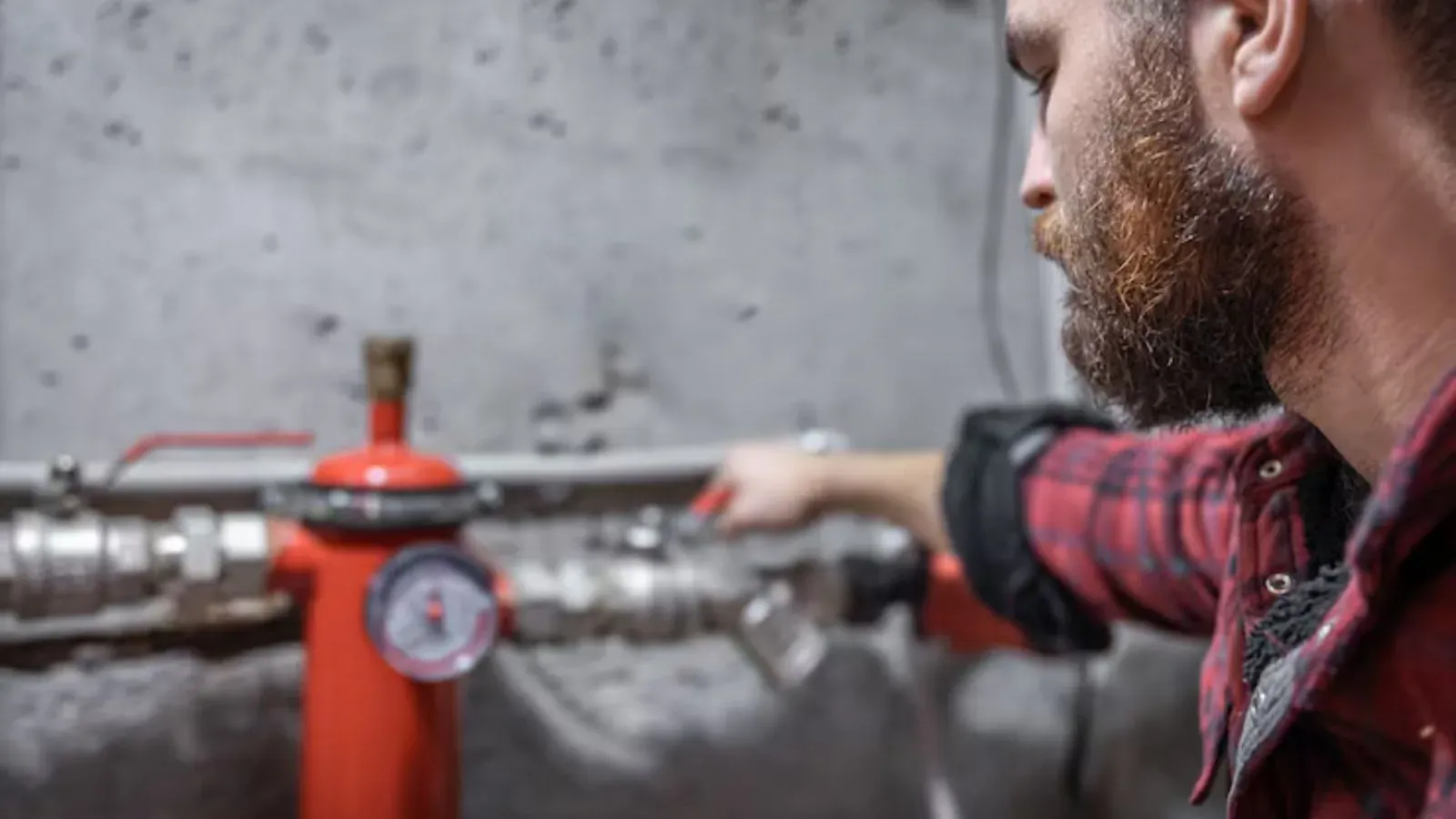
Emergency leak detection in Morton Grove means locating the exact point where a hidden pipe is losing water, using instruments first and tools second, so any opening in your wall or floor stays small. If your meter keeps moving with every tap off, a ceiling stain is spreading, or a floor feels warm and damp, call now. Morton Grove 24/7 Plumbing dispatches licensed plumbers around the clock. A same-day visit can be booked if the day has an opening.
While you wait, the single most useful move is the main shutoff valve. Turn it clockwise until it stops, then open one tap at the lowest level of the house to drain what is left in the pipes.
When a hidden leak is an emergency
Some leaks can wait until morning and some cannot. A slow drip at a fixture is a daytime repair. Water dripping through a ceiling, a wall that feels wet to the touch, or a meter that spins fast with everything off is an active loss, and it gets worse by the hour.
Water also travels. A pinhole above a kitchen can show up as a stain two rooms away, because the water follows framing, pipes and insulation before it finds a place to appear. That is why the stain is a clue and not the answer.
What to do while you wait
- Close the main shutoff valve if water is flowing and you cannot see where from.
- Stay away from wet outlets, switches and appliances. Flip breakers only if the panel sits on dry ground and you can get to it without stepping in water.
- Move furniture, rugs and valuables out of the wet zone.
- Place a bucket under active drips and poke a small hole in a bulging ceiling so it drains in one spot. Stand clear of the area below it.
- Write down the meter reading and take photos of the damage for later.
Signs the leak is hiding in your pipes
Not every leak announces itself. Many show up as a pattern of small changes that add up.
Symptoms that point to a hidden leak
- The meter dial or low-flow indicator moves when every fixture is off
- A water bill that jumped although nobody is using more than before
- Paint that bubbles, peels or turns brown on a ceiling or wall
- A musty smell in a closet, cabinet or basement corner
- A floor section that feels warm, soft or spongy underfoot
- The sound of running or hissing water when the house is quiet
- Low pressure that arrived suddenly and affects the whole house
- A patch of lawn that stays wet and green when the rest is dry
Meter still running or a high water bill
The water meter is the most honest witness in the house. It counts every gallon that passes, and it does not care whether the water goes through a faucet or out of a cracked pipe. If a bill spikes, the meter test below tells you within minutes whether water is leaking or simply being used.
Two-minute meter test
- 1Stop all water useTurn off taps, dishwasher, washing machine and ice maker. Make sure nobody flushes a toilet.
- 2Read the meterNote the numbers on the dial. Most meters also have a small low-flow indicator that spins when even a trickle passes.
- 3Wait and read againCheck after 15 to 30 minutes. If the numbers moved or the indicator never stopped, water is leaking somewhere after the meter.
- 4Rule out the toiletDrop a little food coloring in each tank. If color shows in the bowl without flushing, the flapper is the leak and it is a simple repair.
Tap water here is treated with chlorine, and the village's own water report puts the peak reading at 1.0 ppm. At that level the additive gives off no smell you would notice near a leak. Do not count on your nose to find a pinhole. Use the meter, and call if the numbers move.
A high bill does not always mean a leak. A new family member, a filling pool or a running sprinkler can do the same thing. The test separates those causes from a pipe problem.
Stains and bubbles: leaks in ceilings and walls
A ceiling or wall leak usually comes from a supply line, a drain joint or a fixture above or behind it. A brown ring with a darker edge often means water has returned several times. Paint that bubbles means moisture is trapped behind it.
Before opening anything, the plumber maps the damage with a moisture meter and, where useful, a thermal imaging camera. Hot supply lines show as warm streaks, and cold or wet areas show as dark patches. Acoustic listening then confirms the spot by picking up the sound of water escaping under pressure.
Cutting should be the last step. A finished repair only needs an opening about the size of the pipe fitting, and drywall patches are cheaper to hide than a surprise hole across a room.
Crawlspace and under-floor leaks
Homes with a crawlspace or accessible space under the floor give a plumber a direct view of the pipes. That helps, since a leak under a floor often rots joists and insulation long before the damp reaches the living area.
The warning signs are a musty odor, sagging insulation, a floor that bounces, or mold on framing. The plumber checks supply lines, drain joints and valves by sight and by moisture reading. Where the pipe is out of reach, acoustic listening picks up the sound through the floor.
The village grew from 2,010 people in 1940 to 20,533 by 1960, so many local houses went up during the postwar boom. Pipes from that era have had decades to corrode or loosen at their joints. When an older house starts showing moisture, inspect it instead of guessing.
Buried line leaks between the street and the house
The water service line is the buried pipe running between the street main and your meter, and from there into the house. When it leaks underground, the signs are quieter: a wet strip of soil, a sunken patch of lawn, a drop in pressure, or a bill that climbs for no clear reason.
Finding a buried leak starts with listening on exposed valves and the meter, then a line locator to trace the pipe's path. Tracer gas can follow a leak that does not make much noise, and a plumber pinpoints the exact depth and position before any trench is opened. That precision saves digging, which saves lawn, driveway and money.
A confirmed buried leak becomes a repair job under its own rules. If that is where yours leads, see water line repair for how the permit and the digging rules work.
Slab leaks, where a home has a slab
A slab leak is a supply or drain leak under a concrete floor. It is possible only where a home has a slab section, such as an addition, a garage, or part of the main floor. If you hear water and see no source, a slab leak is worth ruling in or out.
The signs are a warm spot on the floor, a sudden jump in the bill, the sound of running water with all taps off, or damp carpet at the edge of a wall. Locating the leak starts with electronic listening and thermal imaging. The plumber can then mark the floor above the leak so the repair is aimed.
Repair choices vary with the pipe and its position. A section can sometimes be rerouted through walls or ceilings, and sometimes the slab is opened above the break. In an older house with several failing pipes, repiping can be the more sensible option than patching one failure after another.
Sprinklers, yard leaks, meter boxes and pools
Irrigation systems leak where they are easy to forget. A cracked head, a split fitting on a zone line, or a stuck valve can run all night and push the bill up without any sign inside the house. If you suspect your sprinkler, shut off the irrigation supply and repeat the meter test. If the meter stops, the leak is in the irrigation system.
Lawns near the North Branch of the Chicago River and its forest preserve land can stay soggy after spring storms, so a wet patch alone proves nothing. The meter test settles it, and it stops you digging up a lawn that is wet for ordinary reasons.
A leak at the meter box or the shutoff outside the house can look dramatic but is often a simple fitting or valve repair. Look for water pooling inside the box lid or bubbling at the ground.
If the property has a pool or spa, the rules change. Pools lose water to evaporation, so the usual check is a bucket test: fill a bucket to the pool's water line, float it on the pool, and compare the two levels after a day. A bigger drop in the pool points to a leak in the shell or its plumbing. This applies only if you have one.
Tools plumbers use to find leaks
Different leaks call for different instruments. The right method depends on what the pipe is made of, how deep it runs, and how loud the leak is.
| Method | What it finds | Works best for | Limit |
|---|---|---|---|
| Acoustic listening | The hiss or vibration of pressurized water escaping | Supply lines in walls, floors and under slabs | Quiet leaks and plastic pipe carry sound poorly |
| Thermal imaging | Temperature differences from hot lines or wet material | Hot water leaks, radiant lines, wet drywall | Shows a zone, not an exact point |
| Tracer gas | A harmless gas escaping from the pipe through the soil | Quiet leaks and long buried runs | Needs the line to be isolated and filled |
| Line locator | The path and depth of a buried pipe | Service lines and irrigation runs | Locates the pipe, not the leak itself |
| Moisture meter | Dampness behind surfaces | Mapping the spread of a stain | Reads moisture, which may travel from elsewhere |
Many jobs use two or three methods together, because each one confirms or corrects the other. A plumber who finds the leak with one tool and cross-checks with another is less likely to open the wrong spot.
Water losing itself right now?
Call Morton Grove 24/7 Plumbing and we can send a licensed plumber at any hour.
When the leak starts at the water heater or at a business
Not every leak is in a wall. A tank that seeps from its base, a relief valve that drips, or a corroded fitting on the supply lines can look like a hidden leak. A water heater repair visit sorts those out, since the fix may be a valve and not a replacement.
Commercial buildings add more pipe, more fixtures and longer runs, which makes hidden loss easier to miss and costlier to leave. Shops, offices and apartment buildings can arrange a leak survey through commercial plumbing, including after hours when tenants are away.
When a pipe has already failed outright, you are past detection and into repair. Our burst pipe repair page covers what happens next, and one crew of licensed plumbers covers both jobs. We also dispatch across the border to Skokie for homes and businesses there.
What affects the cost of leak detection
- Access to the pipe: A leak under an open crawlspace is quicker to reach than one behind finished plaster or under a concrete slab.
- Number of suspected leaks: One stain may be one leak or three. More points to check means more time on site.
- Depth and surface above the line: A buried pipe under a driveway or a patio takes longer to trace and to open than one under lawn.
- Method needed: Some leaks answer to a simple pressure test, and others need listening gear, thermal imaging or tracer gas.
- Repair after finding: Locating a leak and fixing it are two parts of the work, and the repair depends on the pipe type and position.
Home insurance policies differ on water damage. Many cover sudden and accidental water loss but may not cover a slow leak that went unnoticed or the cost of repairing the pipe itself. Keep photos, the meter readings and the plumber's written findings, because your insurer will ask for them. The price is explained before any work begins.
Want your real number? Call (847) 281-8626.
Morton Grove note
Your tap water starts in Lake Michigan, passes through the City of Evanston, and reaches Morton Grove via the Morton Grove/Niles Water Commission. Because the chlorine peak in the village report is only 1.0 ppm, a leak will not announce itself by smell, so the meter is your best tool.
Census counts show the population jumping from 2,010 in 1940 to 20,533 by 1960. A house from that boom is now many decades old, so pipes, joints and fittings deserve a look whenever moisture appears.
Source type: Morton Grove's published water quality report plus U.S. Census population figures
Questions about leak detection in Morton Grove
Frequently asked questions
Yes. A leak that is losing water at 2 a.m. gets the same dispatch as one found at noon, and same-day visits are booked when the schedule has room. No arrival time is promised. Until the plumber is there, close the main valve, run the lowest tap and check the warning card above.
Do the meter test. Turn off all water, read the meter, wait 15 to 30 minutes and read it again. If the numbers moved or the low-flow indicator kept spinning, water is leaking after the meter. Stains, musty smells and low pressure are other clues.
Usually yes. A plumber uses a moisture meter, thermal imaging and acoustic listening to narrow the leak to a small area, and only then opens the wall. The opening is typically sized to the pipe fitting, not the whole room.
It is possible only where the home has a slab section, such as an addition, a garage or part of the main floor. A warm floor patch, the sound of water with all taps off, or a sudden bill jump are the usual signs.
No. Extra people at home, a new appliance, a filling pool or a running sprinkler can raise a bill. The meter test separates ordinary use from a leak.
A repair to a sewer or water line needs a village permit, but routine upkeep on your plumbing does not. If you are unsure which one your job is, check with the building office at Village Hall before work starts.
Search the plumber's name in the state's online licence lookup, which is run by IDPH. Anyone can use it. A result beginning 058- is an individual plumber, and one beginning 055- is a contractor, so you can tell which kind of entry you have found.