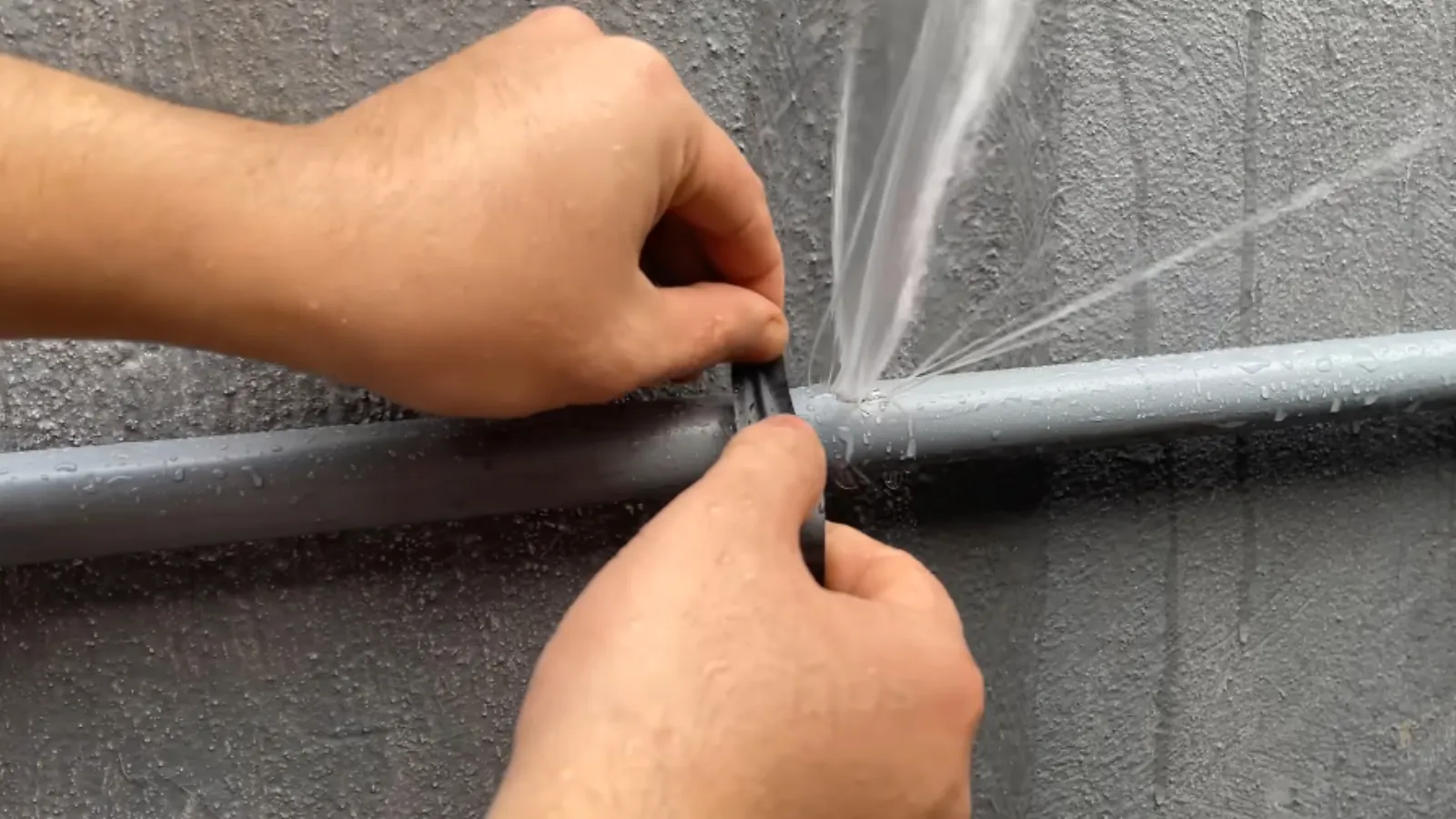
Emergency burst pipe repair in Morton Grove is the work of stopping uncontrolled water from a split, cracked or separated pipe, then replacing the failed section so the line holds pressure again. Water is moving through your house right now, so act first and read second. Licensed plumbers go out at every hour of the day and night, and the first open same-day slot is offered to you.
Find the main shutoff valve and turn it clockwise until it stops. Then work through the list below until the plumber arrives.
While you wait for the plumber
- Shut the main valve. In most houses it sits near the water meter, often in the basement or utility room.
- Open the lowest faucet in the house to drain the pipes and relieve pressure.
- Do not touch wet outlets, cords or appliances. Use the breaker panel only if it is on dry ground and reachable without wading.
- Turn off the water heater's power or gas control if the tank has lost water.
- Photograph the damage and the burst section before anything is moved.
- Move belongings off wet floors and carpets, and mop standing water if it is safe to do so.
When a burst pipe is an emergency
A pipe that is actively spraying or running is always an emergency. So is a pipe that has dripped through a ceiling, soaked a wall, or run for hours behind a cabinet. Water damage compounds, and wet drywall and insulation can start to grow mold quickly.
A slow drip at a joint can wait until the next appointment, but only if you can keep the valve closed or catch the drip in a container. If you cannot stop the water, the job is an emergency at any hour. Dispatch is open at night and on weekends because pipes do not wait for business hours.
Cracked and broken pipe repair
A cracked pipe is a split along its length or a break across it. Causes include freezing, age, corrosion, a hard knock, or ground movement. The repair depends on the pipe material, the size of the failure, and how much of the line is weakened.
For a clean break in a healthy pipe, the plumber cuts out the damaged section and splices in new pipe with proper fittings. If the pipe is corroded for a long stretch, a patch buys little time because the next weak spot is usually close by.
Signs a pipe has split or cracked
- Water spraying, pooling or dripping from a wall, ceiling or floor
- A sudden loss of water pressure at every tap
- A loud bang, hiss or hammering sound when water runs
- Brown or discolored water coming from the faucets
- A damp patch or warm spot on a wall or floor
- A meter that runs fast when every fixture is off
What happens on a burst pipe visit
- 1Stop the waterThe plumber confirms the main valve is shut and isolates the failed section if possible.
- 2Find the breakVisible damage is checked first. Hidden pipes are traced with listening and moisture tools.
- 3Cut out the damageThe failed section is removed back to sound pipe.
- 4Replace the sectionNew pipe and fittings go in, matched to what your house has or upgraded where that is sensible.
- 5Pressure testThe line is filled slowly and checked for drips before any wall is closed.
Leak repair for pipes that are not fully burst
Not every failed pipe splits wide open. Many pinhole and joint leaks behave like a slow, steady loss that you only see as a stain or a rising bill. The repair is smaller than a full break, but the damage underneath can be as bad.
A leaking joint is often a bad solder connection, a worn fitting, or a failed gasket. A pinhole in a copper pipe usually means the pipe wall has thinned from the inside, which suggests other thin spots nearby.
If you cannot tell where the water starts, leak detection narrows it to one spot using listening and thermal imaging before the plumber opens a wall. That helps keep repair costs and drywall patches small.
Frozen pipes and Cook County winters
Cook County winters can freeze water in a pipe that runs along an exterior wall, through an unheated garage, or across a cold crawlspace. Ice expands, and the pipe splits where the ice formed, but you may not see the water until the ice thaws.
If a tap runs slow or not at all in freezing weather, the pipe may be frozen but not yet burst. Keep the faucet open and warm the pipe slowly with a hair dryer or a heating pad. Never use an open flame or a torch, and never thaw a pipe you cannot reach. If you see any water on the floor, shut the main and call.
Prevention is simple. Insulate pipes in cold spaces, seal drafts near water lines, disconnect garden hoses before winter, and let a tap drip during a hard freeze. Moving a stubborn cold-wall pipe or insulating it is a project the plumber can plan with you in the warm months.
Pipe leak, copper, drain and other repairs
A leaking pipe may be water supply, hot water, or drain. The signs and the fix differ, so the first job is to identify which line is involved.
Copper pipe repairs are common in older homes. Copper is durable, but it can develop pinholes from the inside, split from freezing, or fail at old solder joints. A plumber can sweat in a new section or use push-fit couplings to join new pipe to old, depending on access and code.
Drain pipe damage is a different problem. A cracked drain does not spray under pressure, but it leaks wastewater when you use the fixture, and that smell and moisture can go unnoticed for a long time. Water that sits in a wall around a drain is a health concern, so avoid contact with it.
Repairing a burst pipe means replacing the failed section, and the specific tools depend on the material.
| Pipe material | Typical failure | Common repair | Honest trade-off |
|---|---|---|---|
| Copper | Freeze splits, pinholes, failed solder joints | Cut out and sweat in new section, or push-fit couplings | Strong and long-lived, but a freeze split needs a clean cut-out |
| PEX | Freeze cracks at fittings, UV damage | Cut and install crimp or expansion fittings | Tolerates cold better, but fittings are weak points |
| Galvanized steel | Rust-through, leaks at threads | Replace the section, often with newer material | Older steel tends to fail again nearby |
| Cast iron or plastic drain | Cracks, joint separation | Replace the pipe section or couple a new run | Drain cracks leak only when the fixture is used |
Pipe down and water spreading?
Call and we will dispatch a licensed plumber, day or night.
Water main trouble and whose job it is
Not every water problem is inside your house. A water main break in the street, a low-pressure issue affecting the block, or a flooding street belongs to the village. The Village of Morton Grove runs a 24-hour municipal hotline at (847) 663-6161 for those problems.
The hotline does not cover pipes inside your house. If the pipe is on your side of the meter, it is yours to repair. If you are not sure which side the break is on, shut the main valve and call us.
When the break turns out to be in the underground pipe that connects your house to the street, that is a water line repair job. It carries its own permit and digging rules.
After the repair: what comes next
A burst pipe can hint that other pipes are close to the end of their life. If you have had more than one failure in the same house, or the pipe is corroded for long stretches, ask the plumber whether it is time for repiping instead of repairing section by section.
A burst can also be tied to a water heater, since a failed connection or tank can look like a pipe problem. A water heater repair visit checks the connections, the relief valve and the tank itself.
We serve the neighboring village of Niles as well as Morton Grove, so calls from either side of the line get the same 24/7 dispatch.
What affects the cost of burst pipe repair
- Pipe material and size: Copper, PEX, galvanized and cast iron each need different parts and methods.
- Access: A pipe in an open basement is quicker to reach than one behind tile, plaster or a finished ceiling.
- Length of damage: One clean split is a small repair, while corrosion along a long run may justify replacing more pipe.
- Time of day: After-hours dispatch involves a plumber on call outside normal hours.
- Water damage cleanup: The plumber fixes the pipe. Drying, drywall and flooring are separate work, often by a restoration company.
Home insurance often responds to sudden burst pipes but may handle slow leaks differently. Your policy may cover the water damage and not the cost of the pipe itself. Take photos before cleanup, keep the plumber's written findings, and call your insurer early. The plumber also quotes the repair before starting it.
Want your real number? Call (847) 281-8626.
Morton Grove note
The village asks for a permit when a sewer or water line is being fixed, and treats everyday plumbing maintenance as permit-free. Swapping a short length of pipe inside the house usually counts as maintenance. Digging into the line that serves the house does not, so call (847) 470-5214 at the village building office first. Any contractor you hire also has to hold the village's own contractor licence.
Source type: permit guidance published by the village building department
Questions about burst pipes in Morton Grove
Frequently asked questions
Yes. A pipe that splits at midnight on a Saturday goes out exactly as a weekday call would, with a visit the same day offered if a slot is free. Arrival times are not promised, so close the main valve, open the lowest tap and keep the area clear until the plumber is there.
Look where the supply pipe comes through the foundation or floor, close to the meter. That is often a basement corner, a utility closet or the garage. A clockwise turn closes it. Locate it today and show everyone in the household.
A temporary clamp or wrap can slow a leak until a plumber arrives. A lasting repair needs correct fittings, clean cuts and a pressure test, and any repair to the water line needs a permit in Morton Grove.
Leave the faucet open and warm the pipe slowly with a hair dryer or heating pad. Never use a flame. If you see water on a floor, shut the main valve and call right away.
Many policies cover sudden water damage from a burst pipe, though coverage varies. Photos, the plumber's written findings and a quick call to your insurer help the claim.
Call the Village of Morton Grove 24-hour hotline at (847) 663-6161. The hotline handles street and main issues, and not pipes inside your house.