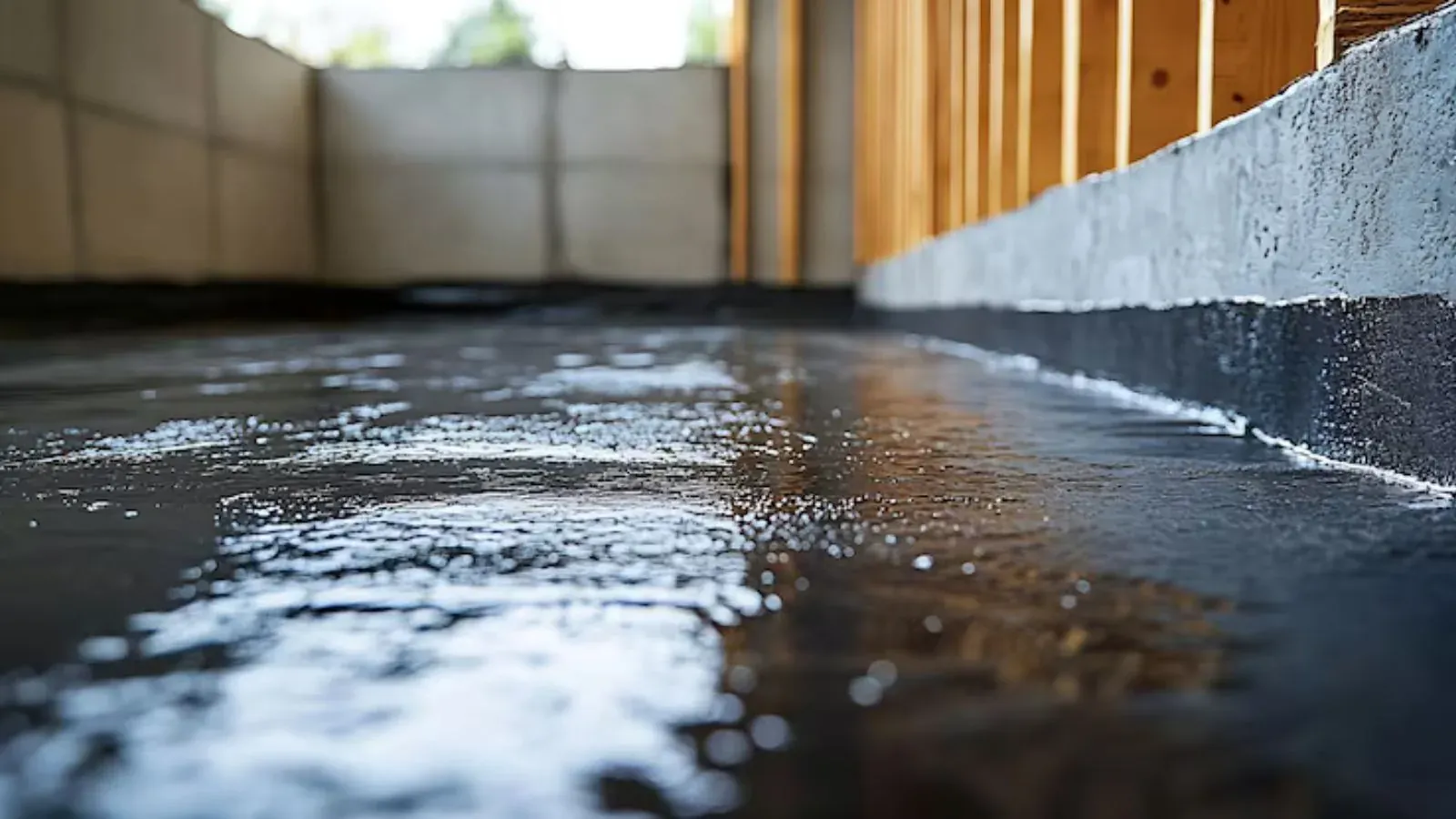
Basement waterproofing is the set of drainage, sealing and pumping steps that keep groundwater and surface water out of a below-grade space. In Morton Grove, IL, the right plan depends on where the water enters, how often, and whether it comes from the ground or from the sewer. Licensed plumbers can sort out which one you have before any work is priced.
Most homes here are owner-occupied, with 85.2% homeownership in 2024, so a wet basement is usually the owner's problem to solve and to pay for. That makes a clear diagnosis worth more than a quick patch.
Signs your basement needs a waterproofing look
- Damp patches or white mineral crust on the walls
- Water at the floor-wall joint after heavy rain
- A musty smell that returns even after cleaning
- Cracks in the floor or walls that darken or leak
- Water bubbling up through a floor drain
- Peeling paint or blistering sealer on masonry
- Carpet edges or stored boxes that stay damp
First, find out where the water comes from
Water in a basement has four common routes. It can seep through the walls, rise through the floor slab, come in through cracks, or back up through a drain. Each needs a different answer, and a repair for one will not stop another.
A plumber starts with a walk-through and a moisture check. A leak detection visit helps rule out a supply or drain pipe that is leaking inside the wall, which looks like groundwater but is not.
Sealants versus drainage
Surface sealers and masonry paints block a thin film of moisture. They do not stop water pushing in under pressure, and they tend to peel when the wall stays wet behind them. Sealants have a place for small, dry-weather dampness and for patching a single crack.
Drainage solves a different problem. It gives water a path to a pit and a pump so it never builds up against the wall. If water appears after storms and not in dry spells, drainage is usually the answer and sealer alone is usually a waste.
Interior drain systems
An interior drain runs along the inside edge of the footing, beneath the slab. It catches water at the floor-wall joint and carries it to a sump pit. The work involves cutting a channel in the floor, laying perforated pipe in gravel, and patching the concrete.
This approach is cleaner than digging outside and works in winter. It does not stop water from touching the outside of the wall, so a damp wall can remain. For the pit that ends the line, see sump pump repair and installation.
| Approach | Best for | Trade-off |
|---|---|---|
| Interior drain and sump | Seepage at the floor-wall joint | Does not keep water off the outside wall |
| Exterior excavation and drainage | Wall seepage on a few sides | Digs up yard, landscaping and sometimes paving |
| Crack injection | Single, narrow leaking cracks | Does not fix water pressure, so new cracks may open |
| Surface sealer | Mild dampness only | Peels if water keeps pushing through |
| Backup-prevention work | Sewer water returning through drains | Does not address groundwater at all |
Floor drains and the sewer side
Not every wet basement is a groundwater problem. A floor drain connects to the house drain, and in a heavy storm that line can back up. Sewer water is dirty, so avoid contact and do not treat it like a seepage fix.
If your drain backs up repeatedly, a camera inspection of the lateral can show a belly, a root intrusion or a collapse. A broken line is a job for sewer line repair, not for drain tile.
Cracks, joints and what actually stops them
Hairline cracks in poured concrete are common and often harmless if they stay dry. A crack that weeps after rain is a different matter. Plumbers use injected polyurethane or epoxy to seal a leaking crack from the inside, which works well for one active crack.
If cracks keep opening or widen over time, the wall may be moving. That is a structural question, so ask a structural engineer before you pay for more sealing. A good waterproofing contractor will tell you when the problem is not theirs.
Where Morton Grove homes have a record of water
The Cook County hazard annex lists flood-prone areas in the village, including the National Park and Emerson/Capri neighborhoods and the Sayer/Foster intersection. It does not say which houses are affected. If you live near any of those spots, that is a good reason to ask about backup protection, not just seepage control.
The annex also lists heavy rain on 7 Mar 2009 and 4 Sep 2008, and a larger storm on 22 Jul 2011. Those dates show that wet seasons are not limited to one month of the year, so a plan that only works after spring rain may miss other storms. Our emergency sump work page covers what to do when a pump fails mid-storm.
Backup prevention is a different tool
Waterproofing keeps groundwater out. It does nothing for sewage that comes back up through a basement drain. Morton Grove has a village flood control assistance program aimed at that exact problem. It pays toward changing how your house drains to the sewer so wastewater can no longer flow backward into the basement.
Two fixes qualify. One is an overhead sewer, which lifts household wastewater to a pump. The other is a backflow valve outside the house, paired with a bypass pump in a buried vault. The village loan pays half of the actual cost, capped at $5,000.
It is limited to owner-occupied homes built before 1965, once per address. You must collect estimates in writing from three separate contractors who hold Illinois licences. Funding is not promised from one year to the next, so call Public Works at (847) 470-5235 and ask whether the program is open.
Sump pumps, battery backup and discharge
A pit and pump are the heart of most interior systems. The pump should discharge to a separate storm system, since the village code bars footing drains and downspouts from the sanitary sewer. A battery or water-powered backup keeps the system running when storms knock out power.
Ask any contractor how big the pit is, how fast the pump moves water, and what happens in a power failure. If the answers are vague, get another quote. We work in Skokie and nearby, where the same questions apply.
How a planned waterproofing job usually runs
- 1Walk-throughthe plumber checks walls, floor, drains and the pit, and asks when water appears.
- 2Diagnosismoisture checks and a camera look at the drain show whether it is groundwater, a leak or the sewer.
- 3Written planyou get the proposed work, materials and a clear price before work starts.
- 4Permitsdial (847) 470-5214 for the village building department and find out which parts of the job need one.
- 5Installation and testdrains, pit and pump go in, and the plumber pours water through to test them.
What changes the price of basement waterproofing
- Method: an interior drain costs less than a full exterior dig on the same wall
- Length of wall and floor involved: more linear feet means more labor and material
- Concrete and finish work: cutting and patching a slab adds time
- Pump, pit and backup: a larger pump and a backup unit raise the total
- Access and finished space: tight or finished basements slow the work
Insurers usually treat slow seepage differently from sudden water damage, and a policy may sell sewer backup coverage as an extra, so read your policy before you plan on a claim. Get at least two written quotes and compare what each one actually includes. Want your real number? Call (847) 281-8626.
Morton Grove note
The Cook County hazard annex lists the National Park and Emerson/Capri neighborhoods and the Sayer/Foster intersection as flood-prone, along with storms on 4 Sep 2008, 7 Mar 2009 and 22 Jul 2011. Ask the plumber whether your basement needs seepage control, backup prevention, or both.
Source type: list of flood-prone neighborhoods in the Cook County plan's Morton Grove section
Ready to plan a drier basement?
Call to talk through your options.
Frequently asked questions
Water does not wait for business hours, and neither does the phone line. A failed pump or sudden flooding can be reported at any hour, day or night. A same-day visit may be possible depending on the schedule, but no arrival time is promised.
Interior drains cost less and avoid digging up the yard, but they do not keep water off the outside wall. Exterior work treats the wall itself but costs more and disturbs the yard.
Usually not. Sealers help with mild dampness, but they peel when water keeps pushing through. Drainage and a pump are what handle storm water.
No. Backup prevention is separate work, such as an overhead sewer or a backflow valve. The village runs an assistance program for homes built before 1965, so ask Public Works if it is still open.
Anything touching the sewer side usually does. Flood control valves, overhead sewers, cleanouts and repairs to sewer or water lines all need one. For drains, pits and pumps, the building department at (847) 470-5214 can tell you before work begins.
Look the name up on the state health department's public license page (IDPH). A plumber's licence number should start with 058-, and a contractor's registration number with 055-. If the number is missing or does not match, keep looking.