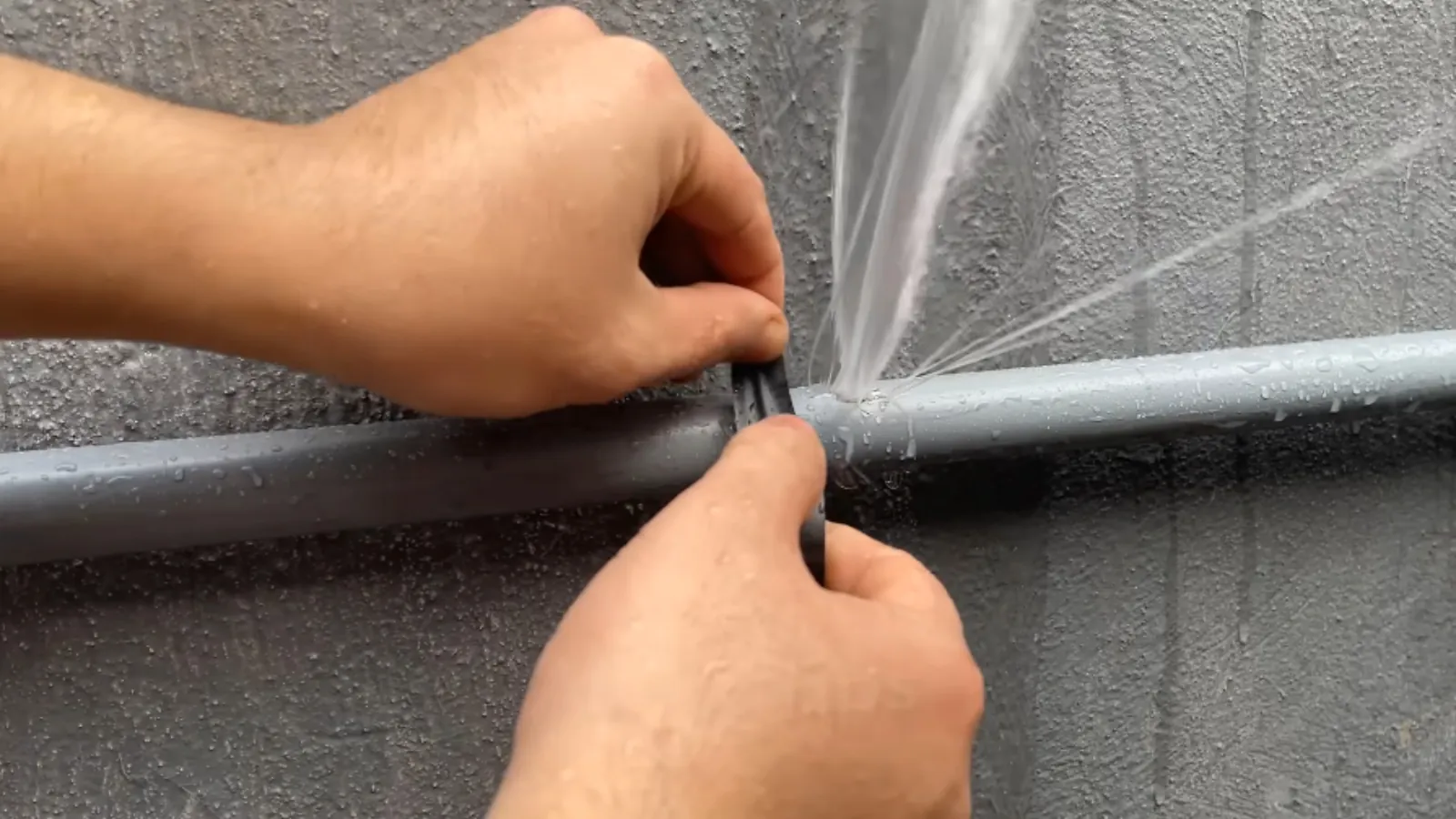
Plumbing tape for leaks comes in two main kinds, and only one of them is made to stop a leak. PTFE thread seal tape, the thin white roll, seals threaded joints so they do not weep. Self-fusing silicone tape wraps around a pipe and bonds to itself for a short-term patch. Neither fixes a cracked pipe under pressure, and neither belongs on a gas line. In Morton Grove, IL homes the right choice depends on where the water comes from.
This guide shows where each product works, where it fails, and when to call. If a leak will not stop, call (847) 281-8626. Someone answers at any hour, and a visit that same day is offered if the calendar allows.
PTFE thread seal tape
PTFE tape, also called Teflon tape or plumber's tape, is a thin white film that fills the tiny gaps between male and female threads. It lubricates the threads too, so the joint tightens evenly. It is cheap, easy and the standard choice for threaded water fittings.
It is for threads only. A joint that is glued, soldered or compression-fit has no thread for tape to seal, and wrapping tape around it does nothing. The tape works at the thread, not at the outside of the pipe.
How to wrap it correctly
Most failed tape jobs trace back to wrapping the wrong way or using too little or too much. Follow this order:
- Turn off the water and dry the threads.
- Hold the male fitting with the threaded end facing you.
- Wrap the tape clockwise, so tightening the fitting pulls the tape in and not off.
- Use three to five wraps for most water fittings, overlapping each turn slightly.
- Press the tape into the thread valleys with your thumbnail, then screw on the fitting hand tight plus a turn or so with a wrench.
Do not wrap the tape over the first thread at the end, because small scraps can break loose and clog an aerator or a valve.
Self-fusing silicone tape
Self-fusing silicone tape is a stretchy, rubbery roll with no adhesive. When you stretch it and wrap it around itself, the layers bond into a single sleeve. It can hold a small leak on a low-pressure line, such as a drain or a sweating fitting, for a short time.
It is a bridge, not a repair. On a pressurized supply line, pressure keeps trying to push through the pinhole, and the tape can slip or burst. If you use it, treat it as a delay until a plumber can replace the section.
Repair clamps and sleeves
A repair clamp is a metal band with a rubber gasket that tightens around a pipe. It can seal a pinhole or a hairline split on a straight section. Clamps are more reliable than tape for short-term fixes because they press the gasket evenly over the damage.
They have limits. A clamp does not work on a corroded section that crumbles at the edges, on a joint, or on a split longer than the clamp. The plumber may keep a few in the truck for temporary holds, but a clamp is still a stopgap in most homes.
| Product | Best use | Where it fails | Typical outcome |
|---|---|---|---|
| PTFE tape | Threaded water fittings | Glued, soldered or gas joints | Long-lasting seal when wrapped right |
| Self-fusing silicone tape | Low-pressure drips, sweating pipe | Pressurized pinholes, cracked pipe | Short-term delay |
| Repair clamp | Pinhole or hairline split on a straight run | Corroded pipe, joints, long splits | Temporary hold |
| Pipe replacement | Any damaged section | None, if done right | Permanent fix |
Where tape never works
Some leaks are beyond tape, and trying anyway wastes time while water damage grows. Tape cannot fix a cracked or split pipe under pressure. It cannot fix a corroded pipe wall that is thin everywhere. It cannot stop a leak at a soldered joint, because the flaw is in the solder.
If the water is coming from inside a wall, under a slab, or from a fitting you cannot see, tape is not the tool. That is a job for leak detection, where a plumber uses acoustic listening, thermal imaging or pressure testing to find the source before opening any wall.
Gas lines are a different case
Never use white PTFE tape on a gas line. Gas fittings need yellow tape rated for gas, or an approved pipe thread compound, and the joint should be installed and tested by a professional. A small mistake on a gas line can become a safety problem fast.
Smell of gas
Do not look for the leak yourself. Get everyone outside first. From a safe spot, dial 911, then the emergency number on your gas bill. Morton Grove's gas comes from Nicor Gas. Nobody goes back in until the responders say so.
What to do first when a pipe is leaking
Before you reach for any tape, stop the water. A leak that keeps running makes every fix harder and every repair bill larger.
- Shut off the nearest valve, or the main shutoff if you cannot find it.
- Open a low faucet to drain the line and relieve pressure.
- Switch off power to the wet area only if you can reach the panel without stepping in water. Otherwise stay back and call.
- Dry the pipe and see where the water starts. A drip that runs along a pipe may start higher up.
- Choose the fix: tape for threads, a clamp for a short hold, or a call for anything else.
If a main-line or supply pipe has split open, the burst pipe repair page describes what a plumber does to stop the flood and replace the damaged section.
When a tape fix is just a delay
A tape patch has done its job if the joint stays dry for weeks. It has only bought time if the drip returns, if you see rust-colored water at the joint, or if the surrounding pipe feels soft or flaky. A repeat leak at the same spot usually means the pipe or fitting is worn out.
Plan to replace the damaged section soon after any temporary patch. The longer a worn section stays in service, the more likely it is to fail at a bad moment, like a winter freeze or while you are away.
Water chemistry and tape life
Some people ask whether the chlorine in tap water wears out tape. The village's water report shows chlorine peaking at 1.0 ppm and ranging from 0.6 up to that figure. PTFE is chemically inert, so tape at a threaded joint is not the concern. The more common cause of a failing joint is movement, corrosion, or overtightening.
Morton Grove note
A sewer or water line repair in Morton Grove needs a permit. Everyday plumbing maintenance does not. Wrapping a threaded fitting or swapping a washer counts as maintenance. Replacing a section of water service line does not.
If a tape fix is covering up something bigger, ring the village building desk at (847) 470-5214 and find out whether the proper repair needs a permit. The chlorine added for microbe control is no reason to expect tape to fail.
Source type: permit guidance from the village and its annual water quality report
Getting a second opinion
If you have taped a joint twice and it still seeps, stop. The thread may be damaged, the fitting may be cracked, or the leak may start somewhere else. A plumber can pressure-test the line and show you where the problem sits.
We serve homes in Skokie and Glenview as well as Morton Grove. Whichever town you call from, the advice is the same: use tape for threads, use a clamp to buy a little time, and call a licensed plumber for everything else.
Questions about tape and leaks
Frequently asked questions
No. PTFE tape seals threads only. For a split or pinhole, use a repair clamp as a short hold and have the section replaced.
Three to five wraps works for most water fittings. Wrap clockwise as you face the threaded end, and press the tape into the threads before you assemble.
Both work on threads. Pipe thread compound fills larger gaps and suits some metal fittings. Tape is cleaner on small water fittings. Some joints use both, but follow the fitting maker's guidance.
No. If water is coming from inside a wall or under a slab, you need a plumber to find the source before anyone opens the wall.
No. Routine upkeep is exempt. Fixing a sewer or water line is not, so if the problem is the pipe and not just a joint, ask the village before work begins.