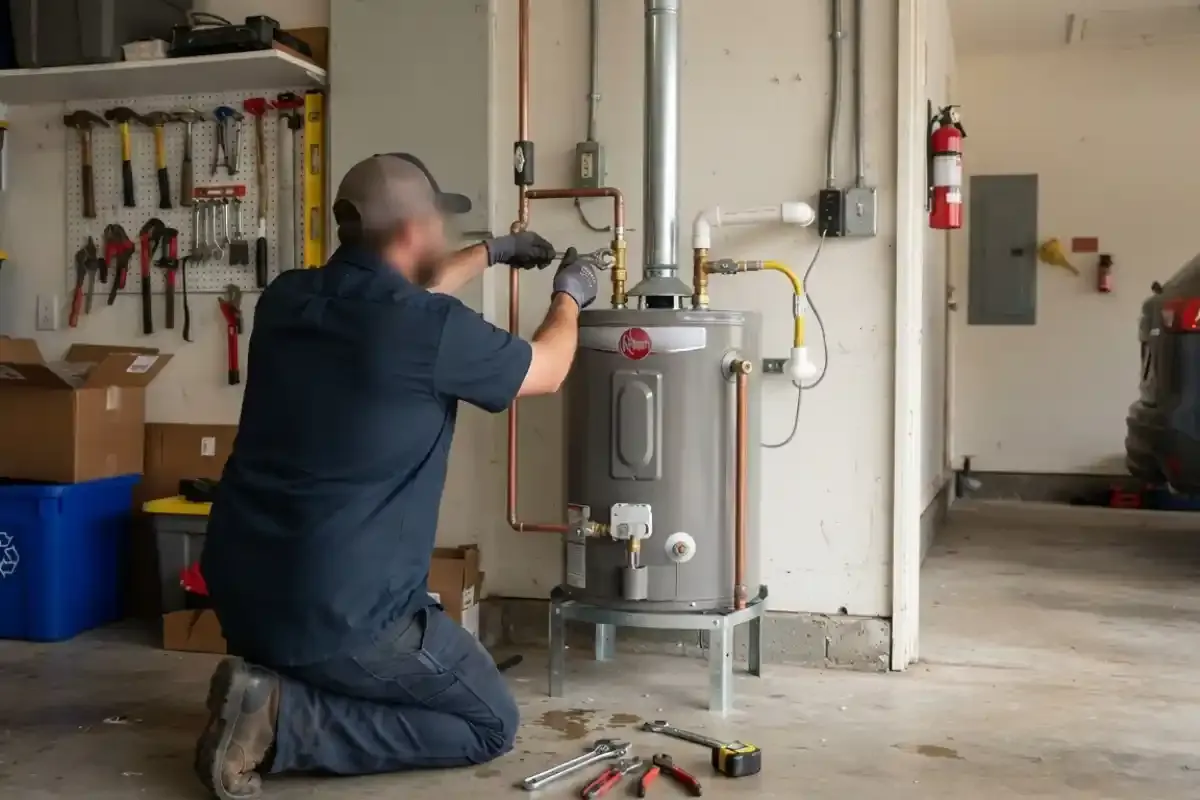
A gas water heater replacement in Morton Grove, IL means draining and removing your old gas-fired tank and installing a new one that heats and stores your hot water. What you pay comes down to six things: tank size, venting, the gas connection, permit paperwork, haul-away, and how easy the tank is to reach. Two houses on the same street can get very different totals because one of those six lines is different.
This guide explains how each line moves the price so you can read any quote with confidence. If you would rather get a number for your own basement, call (847) 281-8626. The line is staffed day and night, and a same-day appointment is offered when the schedule has room.
The six lines that set the price
Every honest quote for a gas tank swap is built from the same parts. The labels change from one company to the next, but the work behind them does not. Knowing the parts lets you see what is missing from a bid that looks cheap.
The short version
- Tank size and efficiency: a bigger or higher-efficiency tank costs more to buy.
- Venting: reusing a sound vent is cheaper than replacing or re-routing it.
- Gas connection: a new flex connector, shutoff and sediment trap add parts and time.
- Permit: the village requires one for water heaters.
- Haul-away: someone has to carry out a heavy, full-of-sediment tank.
- Access: tight stairs and cramped closets add labor.
None of these lines is padding. The sections below take them one at a time.
Tank size and efficiency
A 40-gallon tank and a 50-gallon tank look similar, but the larger one holds more water, weighs more, and costs more at the supply house. The right size depends on how many people use hot water at the same hour, not on how big the house is. A household with two adults rarely needs what a family of five needs.
Efficiency is the second part of the tank line. Standard atmospheric-vent tanks cost less up front. Higher-efficiency models use a fan or a sealed combustion design, which brings electrical and venting changes along with the higher price. Ask the plumber to show the efficiency rating of each tank on the quote so you compare like with like.
Same size is usually the cheapest swap
Replacing a tank with one of the same size and type lets the plumber reuse the existing water lines, gas connection point, and vent path in most cases. Changing the size or fuel type opens up more work. If your family has changed since the old tank went in, the swap is the moment to resize, but expect the quote to reflect it.
Venting and combustion air
Gas water heaters must exhaust combustion gases safely. In a typical house the vent runs from the top of the tank to a chimney liner or a wall or roof termination. If the old vent is corroded, sagging, or the wrong size for the new tank, the plumber has to replace it before the heater can be lit.
Venting is the line most likely to surprise homeowners. A vent that was fine for an old atmospheric tank may not suit a newer model. The plumber should check the draft, the vent slope, and the clearances, then tell you in writing what was reused and what was replaced.
If you smell gas
Do not wait for a quote. Get everyone out of the house first. From the yard or the street, call 911 and then the emergency line on your gas statement, since Nicor Gas supplies the village. Skip the light switches and keep indoor phones untouched until you are clear of the building.
Gas line, shutoff and connector
The gas connection is short but safety-critical. A proper installation includes an accessible shutoff valve, a sediment trap (also called a drip leg), and a flexible connector rated for gas. If your old setup lacks any of these, the plumber adds them, and the parts and labor show up as a line item.
Every joint on the gas side should be leak-tested before the heater is lit. A soap-solution test or an electronic detector is standard. If a quote does not mention testing, ask about it, because that step is the difference between a finished job and a risky one.
Permit, inspection and the village rules
A new gas tank needs a village permit, and you can file for it online. The village says plan review usually finishes within 15 business days, though a straightforward swap often clears sooner than that ceiling suggests. The permit fee is part of the job cost and should appear on the quote as its own line or be clearly included.
Skipping the permit is the wrong way to save money, because the permit record is what shows the work was inspected. An unpermitted heater can cause trouble when you sell the house or file an insurance claim. A plumber who handles the paperwork keeps the inspection on the calendar and the job on the record.
Haul-away, disposal and access
An old tank can hold sediment and water, and it is heavy even when drained. Taking it out of a basement and disposing of it takes labor, a vehicle, and a disposal route. Some quotes bundle this in and some list it separately, so check which kind you have.
Access is the line that no brochure mentions. A tank in an open utility room is quick to swap. A tank behind a narrow door, under a stair, or in a crawl space takes more time, and more time shows up as more labor. Clear a path from the basement door to the heater before the crew arrives and you can keep this line small.
How to compare two quotes line by line
Quotes are easier to compare when you put them in the same grid. Fill in the grid below for each bid, and any blank cell is a question to ask.
| Line item | Quote A | Quote B | What to ask |
|---|---|---|---|
| Tank size and rating | Same gallon size and efficiency rating? | ||
| Venting work | Reused, repaired or replaced? | ||
| Gas shutoff, drip leg, connector | Included or extra? | ||
| Permit and inspection | Who applies and who meets the inspector? | ||
| Old tank removal | Hauled away by the crew? | ||
| Warranty terms | What does it cover, parts or labor? |
A quote that lists none of these lines is hard to compare with one that lists all of them. The cheaper-looking bid may simply be leaving out work you will pay for later. A clear price before work starts is the standard to hold every plumber to, including us.
Repair or replace
Not every failing heater needs a new tank. A bad thermostat, a worn burner component, or a sticky relief valve can often be repaired for far less than a swap. The usual signs that replacement is the better path are rust-colored water, a leak at the tank body, and a tank that has run for many years with falling output.
A leak from the tank itself cannot be patched. If water is pooling under the heater, shut off the cold supply to the tank and the gas control, then call. If you want a repair opinion first, ask the dispatcher. The plumber will tell you honestly whether the tank is worth saving.
Choosing who does the work
Whoever sets your heater needs a valid Illinois plumbing licence. A company working inside village limits also needs the municipal contractor licence, which rests on insurance and a bond. The state side is easy to confirm yourself. Search the plumber's name or business in IDPH's public lookup and compare the result with the paperwork on the quote.
For the full process on our side, the water heater replacement page lays out what a swap includes, and the water heater installation page covers new locations and first-time setups. Our crews cover Morton Grove and nearby towns, including Niles and Skokie, each about three miles away.
Morton Grove note
Gas tank swaps are permit work in Morton Grove, with online applications accepted. Village plan review is described as usually taking up to 15 business days, so ask the plumber how that fits your timeline. Companies working within village limits also hold a Village Contractor's License backed by insurance and a bond.
Because Nicor is the gas utility here, a gas smell means leaving the house and calling 911 and the utility. A plumber's state licence can be searched on the IDPH website. Before you sign, ask who files the permit and request proof of the contractor licence in writing.
Source type: Morton Grove village permit pages and contractor licensing rules
Questions people ask about gas tank replacement
Frequently asked questions
Usually it is the venting work, the tank size or efficiency rating, and what is bundled in. A quote that includes the permit, new gas connector and old tank removal will look higher than one that leaves them out. Compare the same lines on both.
Venting repairs, access problems and inspection timing all change the schedule. Ask the plumber what the plan includes before you book, and do not expect a promised clock time.
It depends on your policy. Sudden damage from a burst tank is sometimes covered, while the heater itself, worn out from age, usually is not. Call your insurer and ask what documents they want before the old tank leaves the house.
Only if the plumber finds a problem. A sound vent with the right size, slope and clearances can stay. If it is rusted, undersized, or does not match the new tank, replacing it is a safety issue and not an upsell.
The plumber normally applies, and water heater permits can be applied for online. Village plan review is capped at roughly 15 business days in typical cases, and many straightforward swaps move faster. For a status on your address, call the village building office at (847) 470-5214.