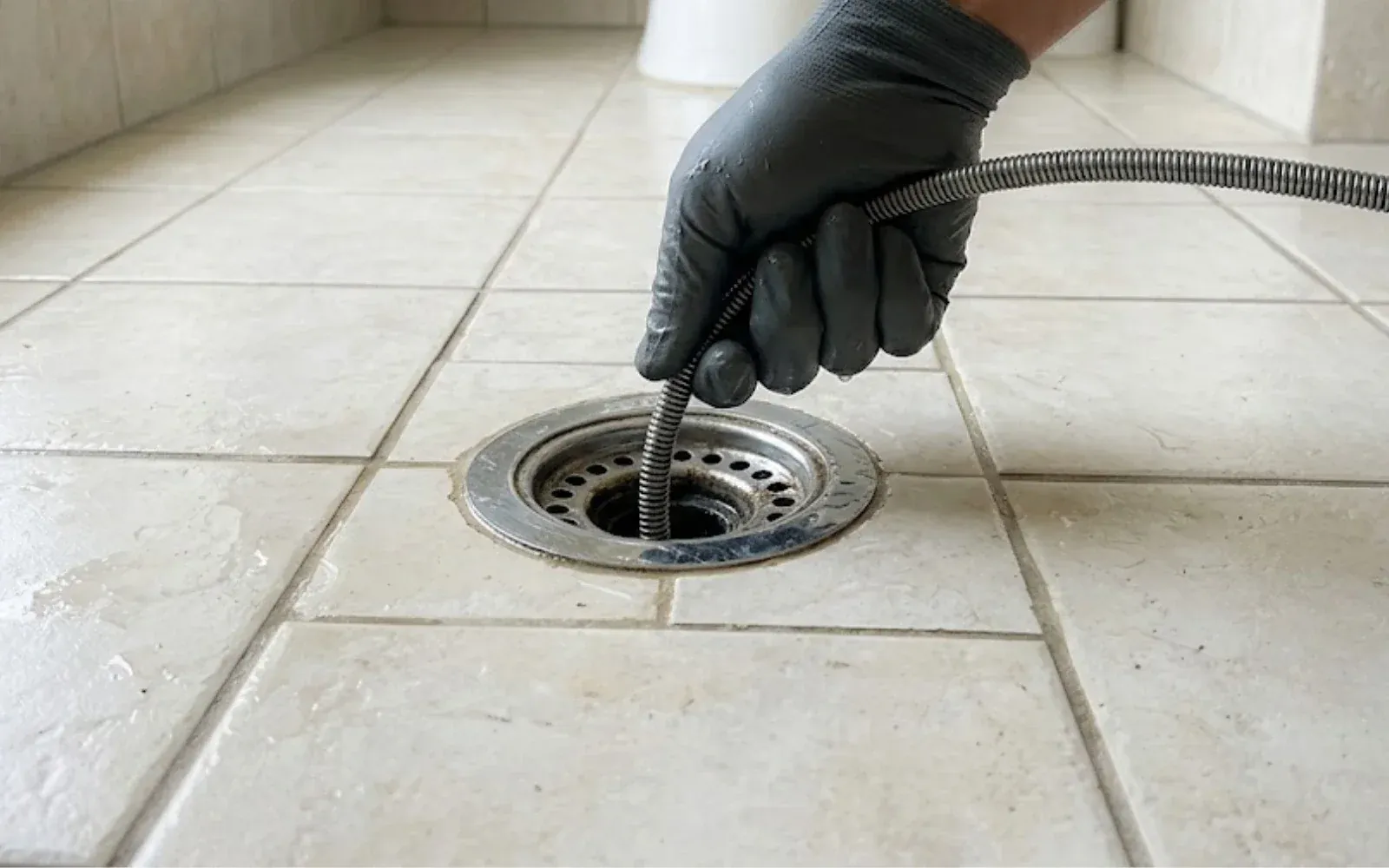
The most common causes of clogged drains are hair and soap in bathrooms, grease and food in kitchens, flushed wipes in toilets, tree roots in outdoor lines, mineral scale in old pipes, and low spots where the pipe has settled. A clog is simply anything that narrows a pipe until water cannot pass. The cause depends on which drain is affected.
One slow sink points to a local blockage in that fixture's pipe. Several slow drains at once, or a basement floor drain that gurgles, point to the main line. This guide sorts the causes by location so you can tell which kind you have, what to try and when to stop.
Start with where the problem shows up
Before you reach for a plunger, look at the pattern. It narrows the cause quickly.
| What you see | Likely location | Common causes |
|---|---|---|
| One sink or tub drains slowly | The fixture's own drain | Hair, soap, grease, food |
| One toilet will not flush clear | Toilet trap or branch | Too much paper, wipes, a foreign object |
| Two or more fixtures slow, lowest first | Branch or main line | Roots, wipes, grease, a sag |
| Toilet gurgles when you run the washer | Main line or vent | A partial main line blockage |
| Floor drain backs up | Main line or sewer | Main line clog, heavy rain, roots |
| Clog returns in weeks | Damaged or sagging pipe | Roots, scale, a belly in the line |
If more than one fixture is affected, plunging will not help. The blockage is farther down the line, where a plumber's tools reach it.
Bathroom clogs: hair, soap and what binds them
In sinks and tubs, hair is the starting point. It catches on rough pipe walls, then soap scum wraps around it and hardens. Within months, a mat forms just below the stopper, and water slows.
Toothpaste, shaving residue and skin oils add to the sludge. A drain strainer is the cheapest prevention. Pull the stopper and clean it every few weeks, and rinse hot water through after showers. When the clog is already formed, a drain snake pulls out a hair mass better than chemicals do.
Toilet clogs
Toilets are built for human waste and toilet paper. Wipes marked flushable, paper towels, cotton swabs and feminine products do not break down. They snag in the trap or in the bends, and then paper piles up behind them. Children's toys are another regular culprit.
If a plunger fails after a few tries, stop. Repeated flushing can overflow the bowl. A plumber can pull the toilet and clear it, or use a closet auger.
Kitchen clogs: grease, food and coffee grounds
Kitchen drains clog from fat that cools and coats the pipe. Food scraps, rice, pasta and coffee grounds stick to it, and the layer thickens. Even a garbage disposal does not make this safe, because ground food still ends up in the same pipe.
The fix is simple but needs habit: wipe pans, bin the fat and use a strainer. If you want to know more about fat specifically, a plumber can explain why drain cleaning often needs more than a cable when grease is involved.
Kitchen drain clog habits to break
- Pouring cooking oil or bacon grease down the sink.
- Rinsing coffee grounds and eggshells into the disposal.
- Letting pasta and rice go down with the dishwater.
- Running the disposal with no water or not enough water.
- Using the sink as a place for fibrous scraps like celery and corn husks.
Main line causes: roots, wipes and sags
The main sewer line carries everything from the house out to the street. When it clogs, every fixture feels it, starting with the lowest ones.
Tree roots are the leading outdoor cause. Roots grow toward moisture and enter through tiny cracks or loose joints. Once inside, they spread and catch paper and debris. Roots return after cutting unless the entry point is repaired.
A sag, sometimes called a belly, is a low spot where the pipe has settled. Water and solids collect there instead of flowing on. A camera shows it clearly. Wipes and grease also accumulate in the main line, and a combined blockage grows faster than any one thing alone.
Why camera inspection matters for repeat clogs
A cable clears the blockage but shows nothing about why it formed. A camera shows roots, cracks, offsets and sags. If a line clogs more than once a year, ask for a camera inspection and an honest explanation before approving another cleaning. Our sewer line cleaning page explains cable machines and hydro jetting.
Scale and mineral buildup
Mineral scale narrows pipes slowly, over years, and it is a bigger factor in older iron and galvanized lines. The 2023 water report from Evanston, the village's water source, lists hardness near 8.0 grains per gallon. That rates as moderately hard, so scale builds on fixtures and inside hot water lines at a steady but not extreme pace.
A water softener reduces scale if you want one, though it is not a fix for existing buildup. Pipes that have lost a lot of diameter to scale or corrosion may need replacement, not cleaning. A plumber who cuts a sample can show you what is inside.
What to try yourself and what to leave alone
A few safe steps are worth a go before you call anyone. Others make things worse.
Safe order of attack for a slow drain
- 1Remove visible debrisLift the stopper and pull out hair by hand or with a plastic drain tool.
- 2Plunge properlyFor sinks, block the overflow with a wet cloth. Plunge with firm, steady strokes for a minute.
- 3Try a small hand snakeFeed it in gently, turn the handle and pull out what catches.
- 4Flush with hot tap waterNot boiling, which can stress some pipes.
- 5Stop if more than one drain is slowThat points to the main line, which needs a plumber.
Avoid pouring caustic cleaners into standing water, because the plumber who arrives next has to work in it. Never mix cleaners. Do not run a snake in a toilet that is overflowing.
Clog that will not budge?
A licensed plumber can clear it and check why it happened.
Prevention that works
Most clogs are avoidable with a few habits. None are hard.
- Use strainers in sinks, tubs and showers.
- Flush only toilet paper and human waste.
- Wipe pans and bin the fat.
- Run water for a bit after the disposal.
- Cut or treat tree roots near the line before they get into it.
- Have a long-clogging line inspected, not just cleared again.
Maintenance cleaning
Some homes with a history of roots or grease benefit from scheduled cleaning. Hydro jetting, covered on our hydro jetting page, scours pipe walls with high pressure water. It is not needed for every house, but it can interrupt a cycle of repeat clogs.
What drives the price of clearing a clog
We do not list dollar amounts, because a clog in a bathroom sink and one in a buried main line are different jobs.
Factors that move a clog clearing price
- Where it sits: A fixture trap is easy, a main line takes more time and equipment.
- Cause: Hair is simple, roots and heavy grease need stronger tools.
- Method: Cable, hydro jetting and camera work vary in time and equipment.
- Access: A cleanout makes it easier and a missing one adds work.
- Time of day: a call at midnight is priced differently from a booked weekday visit.
Insurance rarely covers routine clearing. It may cover water damage from a sudden backup, depending on your policy and any sewer backup endorsement.
Want your real number? Call (847) 281-8626.
Morton Grove sewers and clogs
Morton Grove note
Of the village's sewers, 22.7 miles are combined, meaning waste and rain share one pipe, and about 5.9 miles have been split into separate lines since 1985. Combined pipes sit in the northeast. Basement backups are logged by the village, and a main line backup gets reported to the state EPA within 24 hours of it happening.
For you, that means a main line clog near the combined area can show up as a backup in a low drain, especially in heavy rain. Running a power rod through a sewer line is permit-free in the village, so routine clearing involves no paperwork. Actual sewer repairs are different and do need a permit, so ask the plumber how that step would be handled.
Source type: the village combined sewer overflow plan plus its permit guidance
Nearby homes, same causes
Clogs follow the same patterns in Glenview, just north of the village, with roots as a risk wherever trees stand near a sewer line. Residents of Niles see the same hair, grease and wipe problems. Wherever you live, start with the pattern, then match the cause.
Clogged drain questions
Frequently asked questions
That usually points to the main line. Several fixtures slow together, with the lowest ones affected first. A plunger will not help. A plumber can clear the line and run a camera to find the cause.
They are often labeled that way but they do not break down like toilet paper. They tangle in pipes and add to blockages. Bin them.
Roots grow mostly in warm months but they stay in the pipe all year. A root clog can show up at any time, and it may return after cutting unless the entry is repaired.
Hardness leaves scale that narrows pipes over many years. In Evanston's 2023 numbers the water is moderately hard, near 8.0 grains per gallon. Scale tends to worsen a clog already forming more than to start one.
No, a power rod pass through a sewer is allowed without one. Repairing a sewer or water line does call for a permit. If you cannot tell which your job is, ask the village building office.
Yes. Phones are answered at all hours. Sewage coming up a floor drain is urgent, so keep clear of it and call right away. A single slow sink can wait for a daytime visit, which is often available that same day.