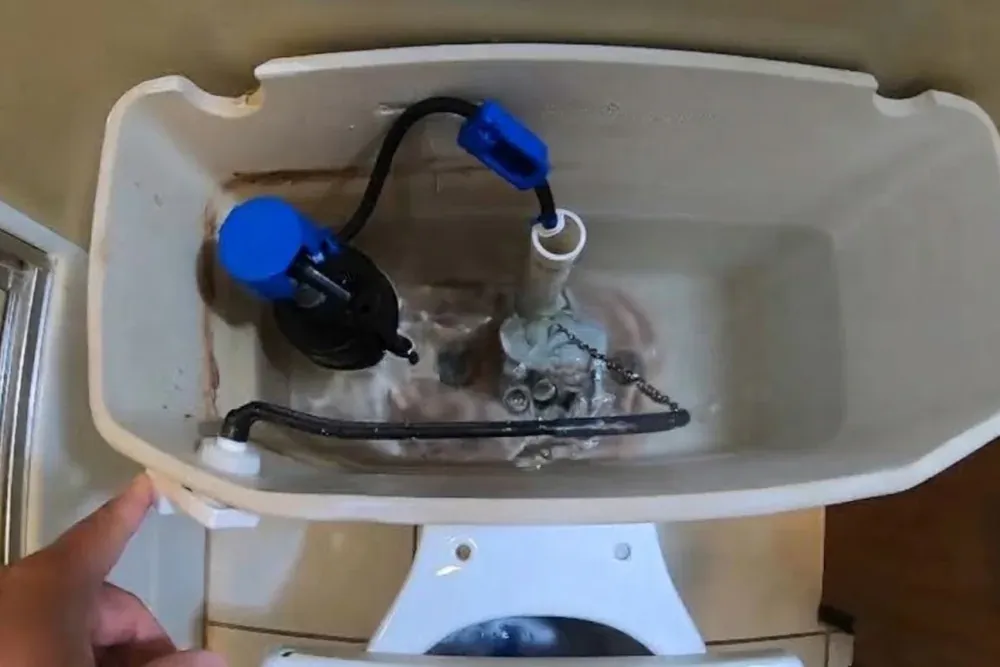
Leaky toilet repair in Morton Grove, IL starts with finding where the water goes, because a toilet can leak in at least six places. Water may trickle from the tank into the bowl, drip from a supply line, seep from the tank bolts, or escape from under the base. A few drops of food coloring, a dry paper towel and ten minutes of looking will point you to the part that needs fixing.
This guide walks through the dye test and the six usual causes. If the leak is spreading or you cannot find it, call (847) 281-8626. A plumber can be dispatched at any hour, and a same-day slot opens up for you whenever one is free.
Start with a dye test
The quietest leak is water running from the tank into the bowl with no sound. It wastes water and raises the bill, and many people never notice. The dye test shows it.
- Lift the tank lid and set it aside.
- Drop 8 to 10 drops of food coloring into the tank water.
- Do not flush. Wait 15 minutes.
- Look in the bowl. If color appears, water is leaking past the flapper or through the overflow.
No color means the tank is holding. Then the leak is somewhere else, so move on to the outside checks.
Dry-paper test for outside leaks
Wipe the toilet dry, then wrap toilet paper or a paper towel around the supply line, the tank bolts and the base. Flush and look. Wet paper at the base suggests a bad wax ring. Wet paper at the tank bottom suggests tank bolts or the tank-to-bowl gasket. Wet paper at the supply connection points to a loose nut or a worn washer.
The flapper
The flapper is the rubber seal at the bottom of the tank. When you flush, it lifts. When the tank empties, it falls back and seals the outlet. A worn or warped flapper lets water creep into the bowl, and the fill valve then tops the tank up over and over.
Chlorine in tap water can shorten rubber part life. According to Morton Grove's water report, chlorine tops out at 1.0 ppm and never drops below 0.6. It is added to control microbes, and it is not a defect, but rubber flappers do wear out over a few years of use. A flapper is also the cheapest part to replace.
Replacing a flapper
Turn off the water at the supply valve and flush to empty the tank. Unhook the old flapper from the ears at the overflow tube and the chain from the handle arm. Match the new flapper to the old one by size, and hook it on with a little slack in the chain. Too tight a chain holds the flapper open, and too loose may let it close early.
The fill valve
The fill valve is the tall assembly that refills the tank. If it fails to shut off, water runs down the overflow tube and into the bowl, often with a hissing sound. The valve might be worn, stuck with debris, or set at the wrong float height.
Hard water can make this worse. The 2023 water quality data from Evanston puts hardness near 136 mg/L as CaCO3, roughly 8.0 grains per gallon. Over time, scale can build up on the fill valve seal and the float, which can cause sticking and slow leaks. Rinsing a sticky valve or replacing it is a modest repair.
The wax ring
A wax ring seals the toilet base to the floor flange. If it fails, water or sewer gas can seep out at the base. You may see a damp spot around the toilet, feel a rocking toilet, or notice a smell. Water at the base does not always mean a wax ring problem, so rule out the supply line and tank bolts first.
Replacing a wax ring means pulling the toilet. Shut off the water, flush, sponge out what is left, unbolt the toilet and lift it away. Scrape off the old wax, set a new ring on the flange, and press the toilet down evenly.
If water is spreading
Shut off the toilet supply valve right away, turning it clockwise at the wall or floor. If the valve will not turn, shut off the main water supply. Keep electrics dry, and stay clear of outlets or panels near wet floors.
Supply line and shutoff valve
The supply line is the braided or plastic tube from the wall valve to the tank. A loose nut, a cracked washer or a corroded line can drip. Tighten the nut by hand plus a small turn with a wrench. If the line is old or frayed, replace it, since a burst supply line can flood a bathroom.
The shutoff valve at the wall can also weep around its stem. A small seep may be solved by tightening the packing nut a quarter turn. If the valve is stiff or crusty with mineral scale, it may need replacement.
Tank bolts and gaskets
Two or three bolts, with rubber washers, hold the tank onto the bowl. If the washers harden, water drips from the tank bottom and runs down the bowl. Do not overtighten the bolts, because porcelain cracks. Tighten them in turns, alternating sides, until snug.
A tank that cracks cannot be patched in any lasting way. A crack in the tank or bowl calls for replacement. Sealant on porcelain is a very short delay.
| Symptom | Likely cause | First action |
|---|---|---|
| Color in bowl after dye test | Flapper or overflow | Replace the flapper |
| Hissing, tank keeps refilling | Fill valve | Adjust or replace the valve |
| Water around the base | Wax ring or bolts | Check the bolts, then the ring |
| Drip at wall valve | Supply line or valve | Tighten or replace |
| Water under the tank | Tank bolts or gasket | Replace the washers |
What a running toilet does to your bill
A toilet that leaks into the bowl can waste a lot of water over a day, and the meter keeps counting. Water bills often rise before anyone hears or sees a leak. If your bill jumps and nothing else changed, run the dye test first.
When the toilet is not the culprit, a hidden leak elsewhere may be. The leak detection page explains how plumbers find water loss in slabs, walls and supply lines using acoustic listening and pressure tests.
Morton Grove note
Chlorine is added to the supply for microbe control and measures between 0.6 and 1.0 ppm in the latest village report. The same Evanston water also tests at about 8.0 grains per gallon of hardness in its 2023 report.
Chlorine can shorten rubber part life, and moderate hardness can leave scale on a fill valve, so expect to replace a flapper or valve every so often. A running toilet raises your water bill, so check the dye test when a bill rises.
Source type: Morton Grove's drinking water report and Evanston's 2023 quality data
When to call a plumber
Call when the leak persists after a flapper and valve swap, when the toilet rocks, when water stains show on the ceiling below, or when you cannot find the source. A professional can check the flange, the drain and the surrounding floor. If you want a repair, our toilet repair service covers it.
We also serve Park Ridge and Skokie. Whichever town you live in, shutting off the supply valve first is the best way to limit the damage while you decide what to do.
Questions about toilet leaks
Frequently asked questions
Use the dye test. Add food coloring to the tank, wait 15 minutes without flushing, and look for color in the bowl.
Often yes. A flapper, fill valve or supply line is a manageable DIY repair. A wax ring or cracked porcelain is trickier, and a plumber is a good call if you are unsure.
A worn flapper, a misadjusted chain or a faulty fill valve usually causes it. Check the chain slack first, then the flapper.
Repair makes sense for worn inner parts. Replace the toilet if the tank or bowl is cracked, or if repairs keep failing.
The water supply carries chlorine between 0.6 and 1.0 ppm, and that can shorten rubber part life over time. It is not a reason to worry, but expect rubber flappers to need replacement now and then.