Yes, olive oil can clog drains, though not all at once. Olive oil is a fat. Poured down a kitchen sink, it cools in the pipe, thickens and clings to the walls. The next greasy pan, coffee grounds or food scrap sticks to that coating, and the pipe narrows until water stops moving.
Many people assume liquid oil is safe because it runs freely when poured. The problem starts a few feet down the line, where the pipe is cooler. This article explains what happens, how to dispose of oil, where soap and enzyme cleaners fall short, and what a Morton Grove household should know about grease and the sewer.
What happens to olive oil in a kitchen drain
When oil leaves the pan it is warm and thin. It travels through the trap under the sink and into the horizontal drain line. The pipe wall is cold, especially in a basement or crawlspace. Fat cools quickly on contact and begins to coat the surface in a thin film.
Each time you wash a dish, a little more sticks. The film catches food particles and soap residue, and the layer grows. Over weeks or months it can reduce a drain line to a fraction of its width. The sink slows, then gurgles, and then backs up. The blockage is often a mix of fat, starch and debris, not pure oil.
Why hot water does not solve it
Running hot water can push oil farther down the pipe, but it does not remove it. As the water cools further along the line, the oil solidifies again, often in a spot you cannot reach. The same applies to boiling water poured down a drain. It may give a temporary improvement and then the clog returns.
Soap does not dissolve fat for good
Dish soap breaks fat into small droplets so they wash away from a pan. In a pipe, it moves the problem along. Once the soapy water cools and the droplets settle, the fat can recombine downstream. Soap helps at the sink, but it is no cure for a greasy line.
Not all fats are equal, but none are drain-safe
People ask whether olive oil is better than bacon grease. It is less likely to harden solid at room temperature, but it still thickens in a cold pipe. All cooking oils and fats belong in the trash, not the drain.
| Substance | State in a cold pipe | Clog risk | Better disposal |
|---|---|---|---|
| Olive oil | Thick, tacky film | Moderate, builds over time | Cool, pour into a sealed container |
| Bacon grease and butter | Hard, waxy solid | High, clogs quickly | Let it set, scrape into trash |
| Coconut oil | Solid below warm room temperature | High | Scrape into trash |
| Vegetable and canola oil | Sticky film | Moderate | Seal and bin it |
| Coffee grounds | Dense sludge that binds with fat | High when combined with oil | Compost or trash |
The clog risk rises sharply when fat meets food particles. A drain with only water and soap usually stays clear. A drain with oil, rice, pasta and grounds is the setup for a stoppage.
How to dispose of olive oil without hurting your pipes
Disposal does not take much effort. A small habit change protects the whole line.
A better way to handle used cooking oil
- 1Let it coolLeave the pan until the oil is warm to the touch, not hot, which prevents burns and melted containers.
- 2Pour into a containerUse a jar or a coffee can with a lid. Keep a dedicated one near the stove.
- 3Wipe the pan firstUse a paper towel to wipe out leftover oil and food before you wash the pan.
- 4Seal and bin itWhen the container is full, close it and put it in your regular trash.
- 5Use a strainerA mesh basket in the sink catches food bits that bind with any residue.
For small amounts, such as a salad dressing residue, rinsing a plate is fine. The goal is to stop pouring a cup of used oil down the sink in one go.
Enzyme cleaners and drain products: honest limits
Many households reach for a product when a drain slows down. Some work a little. None replace a plumber for a real blockage.
Enzyme or bacterial cleaners digest organic material slowly. They can help keep a lightly greasy pipe from building up if used regularly, but they are slow and rarely clear a full clog. Caustic chemical cleaners can open a blockage, but they are harsh on pipes, can splash on skin, and are dangerous if mixed with other products. They also leave caustic water in the pipe, which is a hazard for the person who has to work on it next.
When to stop using cleaners and call
If you have poured a cleaner and the sink is still backing up, stop adding more. Standing chemical water makes a clog harder and riskier to clear. A plumber can use a cable machine or hydro jetting to cut through fat and flush the line with high pressure water.
How a plumber clears a greasy drain
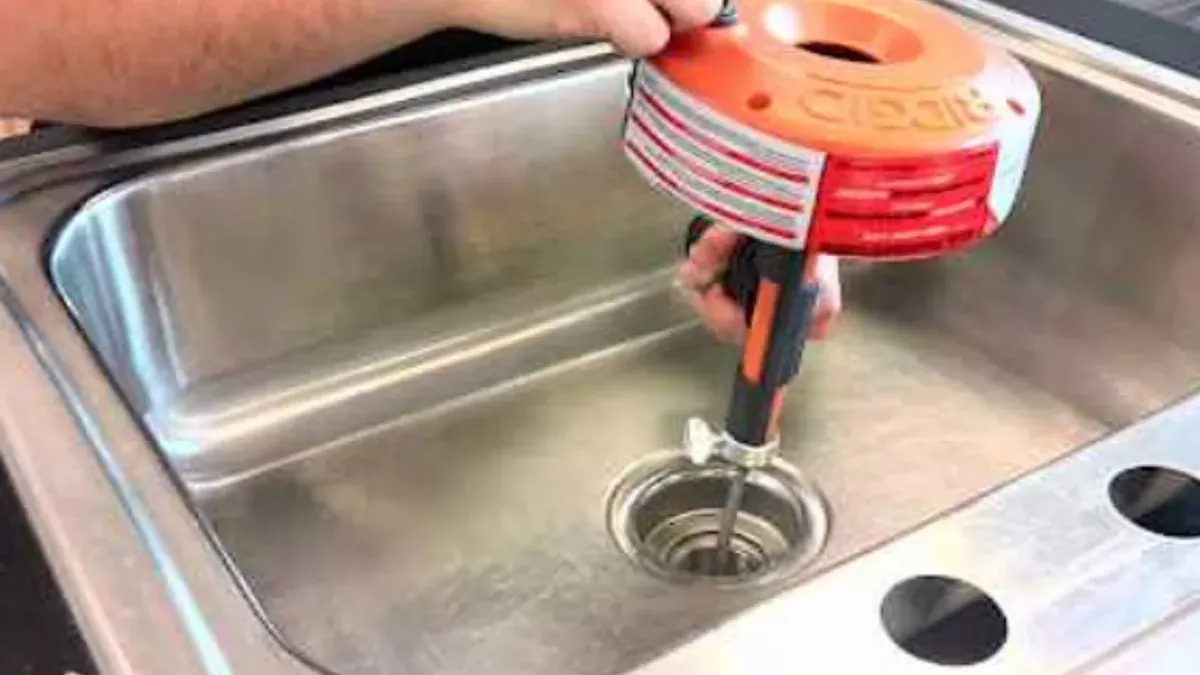
A small kitchen clog can often be cleared with a hand cable that breaks through the blockage. This works for a soft plug, but a greasy pipe often reforms its coat within weeks because the cable only punches a hole through it.
Hydro jetting is the fix for thick buildup. A nozzle on a hose sprays water at high pressure from inside the pipe, scouring the walls clean and flushing the debris out. It is more thorough than a cable for fat, and it is a good choice when slow drains keep returning. For routine blockages, see the page on drain cleaning, which explains cable, camera and jetting options and when each is the right call.
Kitchen drain slow again?
A licensed plumber can clear the fat and tell you what caused it.
Grease beyond your sink: the sewer you share
Fat that leaves your house keeps traveling. In older sewer lines it can cool and collect, join with other household waste and slowly build up. It adds to the same blockages that cause basement backups.
Grease is one of the few causes of a clog that homeowners control. A little care at the sink protects your own line and lowers the strain on the system shared by your block.
What drives the price of clearing a grease clog
We do not post dollar amounts, because a clog in a sink trap is a different job from fat packed in a main line. These factors move the price.
Factors that move a grease clog repair price
- Location of the clog: A sink trap is simple, a buried kitchen line or the main line takes longer.
- Method used: A hand cable is quicker, hydro jetting takes more equipment and time but cleans more thoroughly.
- Access: A cleanout makes the job easier, a missing cleanout may mean working through a fixture.
- Camera inspection: Looking in the pipe adds a step but shows whether the line is damaged.
- Repeat problem: Frequent clogs may need a repair, not just another cleaning.
Insurance seldom pays for routine drain cleaning. Water damage from a sudden backup may be covered, depending on the policy and endorsements.
Want your real number? Call (847) 281-8626.
Morton Grove sewers and grease
Morton Grove note
Sewers in the northeast of the village are combined, so a single pipe holds household waste and rain runoff. That section is bounded by Chick Evans Golf Course to the north, Main Street to the south, the Edens Expressway to the east and the North Branch of the Chicago River to the west. The village also has separate sanitary sewers elsewhere.
Under the village operations plan, basement backups are recorded, and the Illinois EPA hears about main line backups within a day. In practice, backups get tracked closely. A grease-heavy kitchen line can add to a blockage inside your own pipe, so keep fat out of the sink wherever your home sits.
Source type: village combined sewer overflow plan, sections on system layout and backups
Nearby towns with the same kitchen habits
Fat clogs show up everywhere. Households in Park Ridge face the same cooling-pipe problem, and so do those in Glenview. The fix at home is the same: scrape, seal, bin and strain.
Olive oil and drain questions
Frequently asked questions
A tiny residue rinsed with plenty of water and soap is unlikely to cause trouble. A pan of oil or a cup of used oil should go in a sealed container and the trash. Repeated small amounts add up.
No. Oil in a toilet reaches the same sewer and clogs it the same way. Put used oil in the trash.
They can help prevent mild buildup over time but they act slowly, and they rarely clear a full blockage. A cable or hydro jetting is more reliable for a clog already in place.
A cable punches a hole in a fatty clog but may leave the coating on the pipe walls. If it returns within weeks, ask about a camera look and hydro jetting.
The combined sewers carry waste and stormwater together, and heavy rain can fill them. Grease in your own line can still block it and add to a backup, so the safest habit is keeping fat out of every drain.
Yes. Calls are answered at all hours. A kitchen sink backing up with sewage, or water spreading over the floor, is worth phoning in at once. A grease clog that only slows the drain can usually wait for a daytime visit.